The city everyone photographs is the crossing, the neon, the crush. The city worth remembering is the lane behind it — the eight-seat counter, the shrine at the end of a residential street, the vending machine humming in the dark.
The megacity that runs on quiet · 35.68° N · 139.65° E
Tokyo arrives in your head as noise before you ever land: the Shibuya scramble, the signage stacked ten storeys high, the bullet trains, the pixel-bright chaos every film and advert has taught you to expect. All of it is real, and the first time you stand under the screens at Shinjuku's east exit at nine in the evening it will knock the wind out of you. But that is the surface, and Tokyo is a city that keeps almost everything good one layer down.
This is a place of thirteen million people that somehow feels calm at street level — a metropolis run on a shared, unspoken agreement to be considerate, to keep your voice down on the train, to queue without being told. The result is the strangest and best contradiction in travel: the largest city on earth is also one of the most restful to walk around. The energy is on tap when you want it and switched off the moment you turn down a side lane.
What follows is not a countdown of the sights. You will see the temple in Asakusa and cross at Shibuya and they will be exactly as advertised. This is the other information — where to base yourself so the city feels navigable, when to come so you catch the blossom or the maples and not the rainy grey, how to ride the trains without panic, and how to eat like the people who live here, which in Tokyo is a genuine art form practised at every price point.
The caseWhy Tokyo rewards the curious
Tokyo is not a city of monuments. There is no single view that sums it up, no Eiffel Tower to tick off and photograph and move past. Its genius is instead distributed and granular — it lives in the density of small excellences, thousands of tiny operations each doing one thing with obsessive care. A man who has fried tempura for forty years. A seven-seat bar that serves only whisky and plays only jazz on vinyl. A bakery in a train station that would be the best in a European capital and here is merely fine.
This is what makes it inexhaustible. You cannot 'do' Tokyo, and the sooner you abandon the idea the happier you will be. What you can do is pick a neighbourhood, walk it slowly, follow the smell of grilling and the glow of a paper lantern into a doorway barely wide enough for a menu, and trust that whatever you find will be prepared properly. The city rewards curiosity and punishes hurry. Wander into a department-store food hall in the basement, an entire underground universe of glistening produce and free samples, and you understand that in Tokyo the everyday has been polished to a level other cities reserve for special occasions.
The calendarWhen to go
Two windows tower over the rest. Late March into early April brings the cherry blossom, when the whole city turns out to sit under the trees along the Meguro River and in Ueno Park for hanami, eating and drinking beneath the pink canopy. It is genuinely as lovely as it sounds — and genuinely as crowded, with hotel prices to match and a bloom that lasts barely a week and refuses to be scheduled. Watch the forecasts, keep your plans loose, and you may catch it. Late November is the quieter twin: the maples turn scarlet and gold in the temple gardens and the light goes clean and low, arguably the most beautiful and least stressful time to be here.
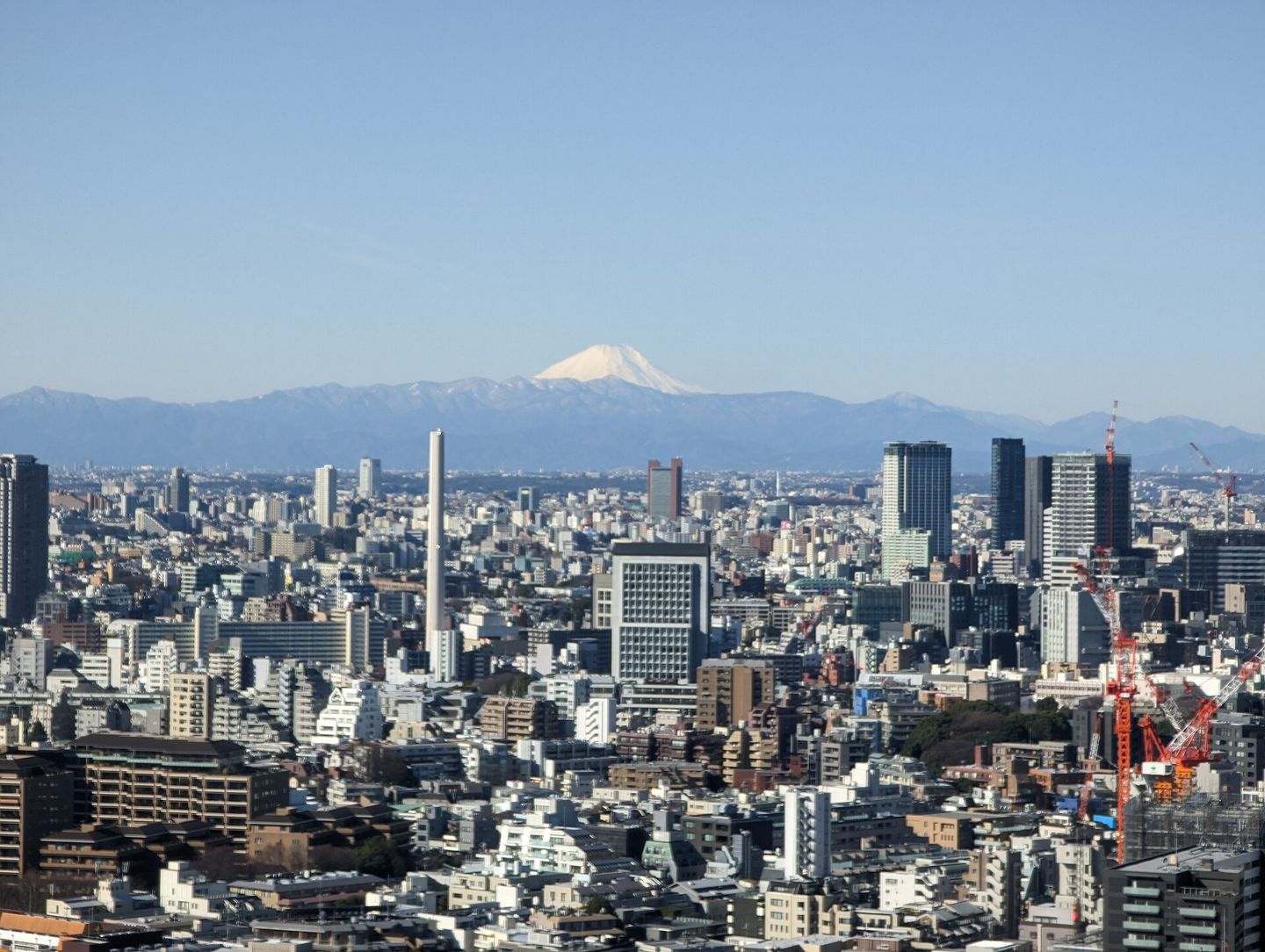
Around those peaks, October and early November give you crisp, dry, blue-sky days that are ideal for walking. May is warm and pleasant before the wet arrives. Avoid the rainy season, roughly mid-June to mid-July, and above all avoid deep summer: from late July through August Tokyo becomes a humid furnace, thirty-five degrees and dripping, and the pleasure of the streets evaporates. Winter is cold, dry and clear, with far fewer visitors and the bonus of Mount Fuji visible on the horizon on the sharpest mornings. Also mind Golden Week in early May and the New Year holiday, when the whole country travels and much of the city shuts.
LogisticsRiding the trains
The train map looks like a plate of dropped noodles and it terrifies everyone for about a day, after which it becomes the best thing about the city. Two systems overlap: the JR lines, run by Japan Railways, and the subway, split confusingly between Tokyo Metro and the Toei network. In practice you do not need to understand the politics. Get a Suica or Pasmo card — a rechargeable tap card you can now add straight to an iPhone or Apple Watch — top it up, and tap in and out of everything, trains and buses and even convenience stores, without ever thinking about fares or ticket machines again.
The one line to learn by name is the JR Yamanote, the green loop that circles central Tokyo and strings together Shinjuku, Shibuya, Tokyo Station, Ueno and most places you will want to go. Orient yourself by it and the rest falls into place. Trust your phone's transit directions completely; they are flawless and tell you which carriage to board for the fastest exit. Trains are spotless, punctual to the second, and stop entirely around midnight, so mind the last one or resign yourself to a taxi or an all-night bar. Two rules of etiquette: no phone calls, and stand left on Tokyo escalators so walkers pass on the right. The JR Pass, worth it for travellers hopping between cities, is not worth it for a stay within Tokyo alone.
The tableHow Tokyo actually eats
Forget the idea that eating well here means a hushed sushi temple and a month's rent. Some of the best food in Tokyo costs less than a sandwich back home. The city's real genius is the specialist: shops that do one thing — ramen, tonkatsu, soba, grilled eel, tempura — and have done nothing else for generations. Walk in, and at many you order from a ticket machine by the door, press the button with the picture, hand the slip to the counter, and eat some of the finest food of your life in fifteen silent, blissful minutes.
The evening ritual is the izakaya, the Japanese pub, where you settle in with a cold beer or a highball and order small plates as you go — grilled skewers of yakitori, edamame, sashimi, karaage, whatever the day is good for. It is loud, warm, smoky and social, the opposite of the reverent stereotype, and the truest window into how the city relaxes. Learn to love the convenience stores too, and lose the snobbery fast: a 7-Eleven, Lawson or FamilyMart here sells genuinely excellent onigiri rice balls, egg sandwiches with a cult following, hot fried chicken and a wall of drinks, all for pocket change, open all night. It is the single most useful institution in the city. Tipping does not exist and attempting it causes polite confusion; the price is the price, and the standard is astonishing all the way down.
The mapNeighbourhoods to know
Tokyo is less a city than a federation of towns that grew until they touched, and each one has a distinct temperament. Shinjuku is maximum Tokyo — skyscrapers, the sensory overload of Kabukichō, and, tucked beneath it all, Omoide Yokochō and the tiny hand-built bars of Golden Gai, a few square blocks of postwar alleyways where each bar seats six. Shibuya is younger, the home of the famous scramble crossing, fashion, and a nightlife that spills up the hills into Ebisu and Daikanyama.
For the older, slower city, cross to the east and north. Asakusa keeps the flavour of old shitamachi, the low-city downtown, around the great Sensō-ji temple and its lantern-hung approach, all craft shops and the smell of grilling rice crackers. Nearby Yanaka is the antidote to the neon entirely — a rare pocket of prewar streets that survived the bombing and the bulldozers, all wooden houses, cats, cemeteries and tiny craft studios, best explored on foot with no plan at all. Ginza is the grand grown-up quarter of flagship stores, old department stores and serious restaurants, hushed and expensive and worth a wander even if you buy nothing. And Shimokitazawa, a couple of stops out, is the bohemian heart — a low-rise warren of vintage shops, secondhand records, tiny theatres and coffee bars, car-free and endlessly browsable. Knowing which of these suits you is the whole game, and the key to where you sleep.
Field intelligencePractical intelligence
A handful of things that quietly smooth every day here. Carry cash — Japan is far more card-friendly than it was, but small restaurants, the ticket-machine ramen joints, shrines and older shops are still cash-only, and the most reliable ATMs for foreign cards are inside 7-Eleven stores, on every corner. Pick up a pocket wifi or an eSIM on arrival; you will lean on your phone constantly for maps and translation, and the Google Translate camera that reads menus in real time is close to magic.
Manners are the operating system. Keep your voice low on trains, do not eat while walking, and never stick your chopsticks upright in rice. Carry a small bag for your rubbish, because public bins are strangely rare and the streets are somehow still immaculate. Shoes come off wherever you see a raised wooden step or a row of slippers — in some restaurants, temples, and every home. Tattoos can still bar you from traditional public baths and some onsen, so check ahead or look for tattoo-friendly spots. And download an offline map and the transit app before you need them. Beyond that, Tokyo is famously, almost eerily safe and honest; lost wallets get handed in, lone travellers relax, and the biggest risk to your trip is simply trying to see too much of an inexhaustible city in too few days.
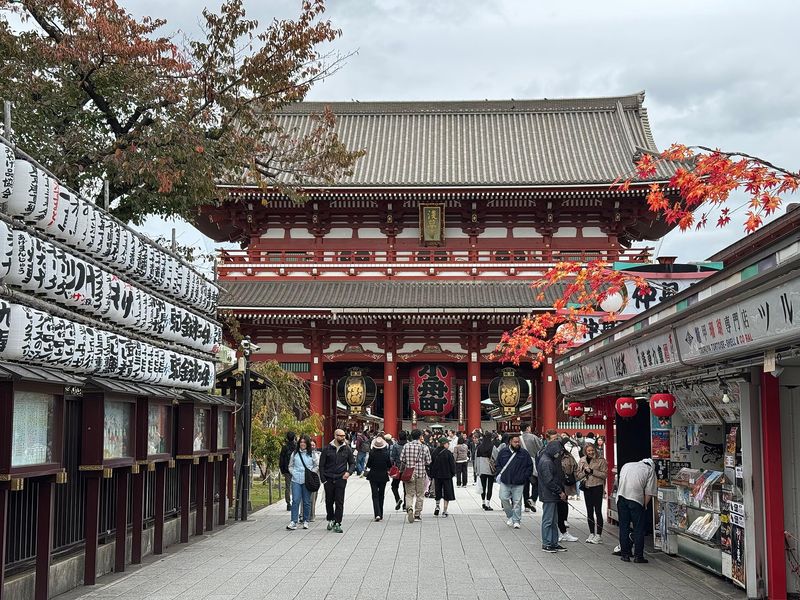
Tokyo's oldest temple, a vermilion complex fronted by the giant Kaminarimon lantern and a long approach of stalls selling crafts, fans and grilled sweets. Touristy, yes, but the scale and the incense smoke earn it.
Tip:Come at dawn or after dark when the crowds thin and the whole thing is lit and nearly empty — utterly different from the midday crush.
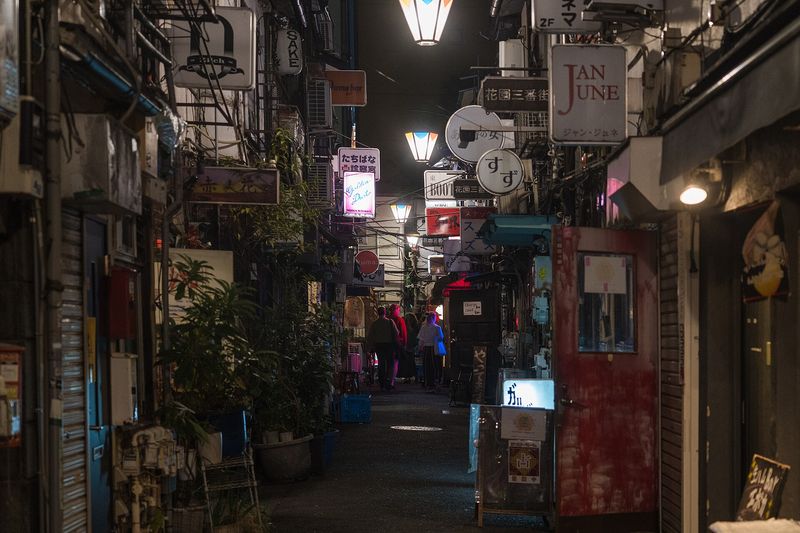
Six narrow alleys of tiny hand-built bars, most seating six or seven, each its own world of theme and regulars. A surviving fragment of postwar Tokyo wedged beneath the towers.
Tip:Look for bars with an English 'welcome' sign or no cover charge posted; some levy a seat fee on strangers, so a quick glance saves an awkward surprise.
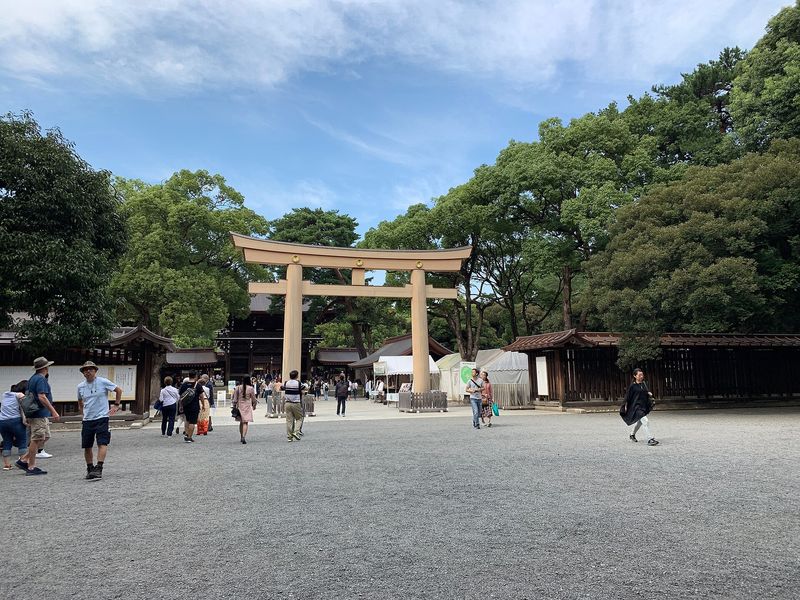
A vast forested shrine to the emperor Meiji, reached along a gravel avenue through a hushed man-made woodland that swallows the city noise the moment you pass the towering wooden torii gate.
Tip:Go early on a weekend and you may catch a traditional Shinto wedding procession crossing the main courtyard in full dress.
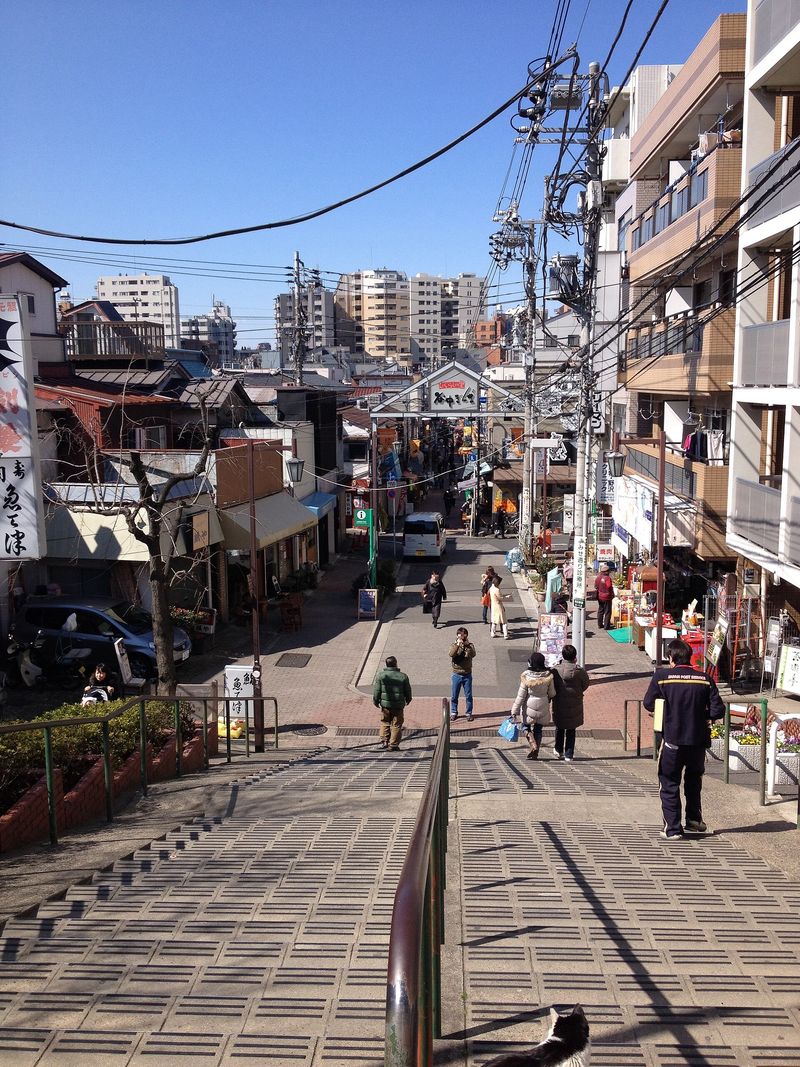
A rare survival of low-rise, prewar Tokyo — wooden houses, temples, cats, and the long shopping street of Yanaka Ginza. The single best place to feel the old city and the calm beneath the neon.
Tip:Time your wander for late afternoon and stand on Yūyake Dandan, the 'sunset staircase', as the light goes gold over the shopping lane.
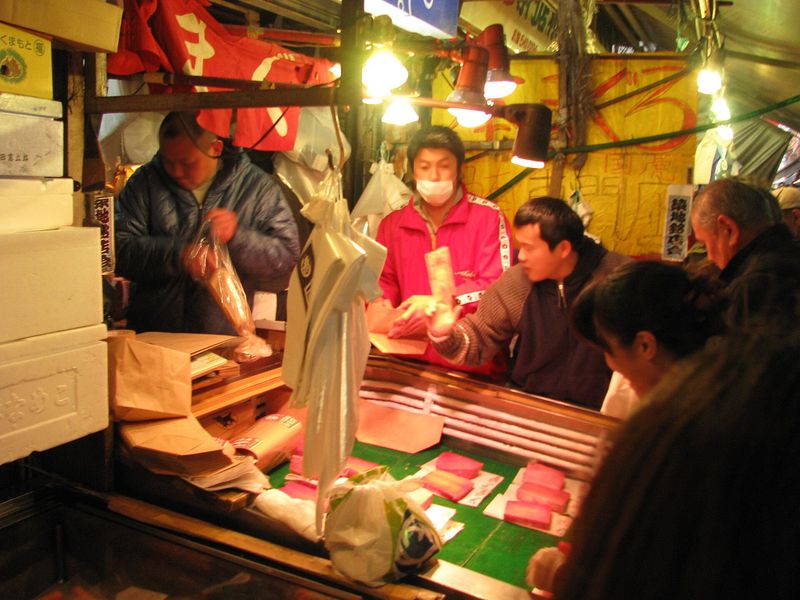
The wholesale tuna auctions moved to Toyosu, but the outer market stayed — a warren of stalls selling knives, dried goods, tamagoyaki on a stick, and some of the freshest sushi breakfasts in the city.
Tip:Arrive hungry before 9am, eat your way down the lanes in small bites, and skip the sit-down places with the longest tourist queues for the standing counters locals use.
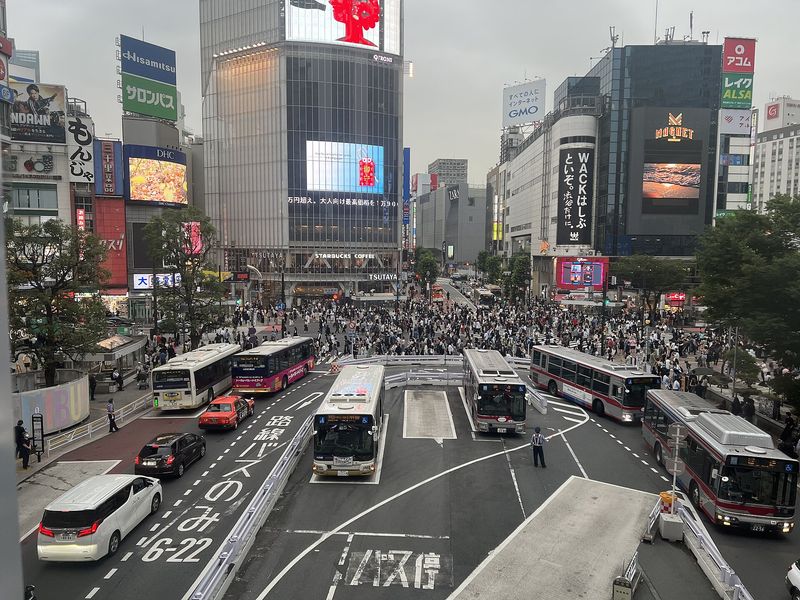
The world's most photographed crossing, a choreographed flood of people from every direction at once. Above it, the Shibuya Sky observation deck gives an open-air platform over the whole grid.
Tip:View the crossing free from the second-floor window of the Starbucks across the road, then book Shibuya Sky for a sunset slot to watch the city lights come on.
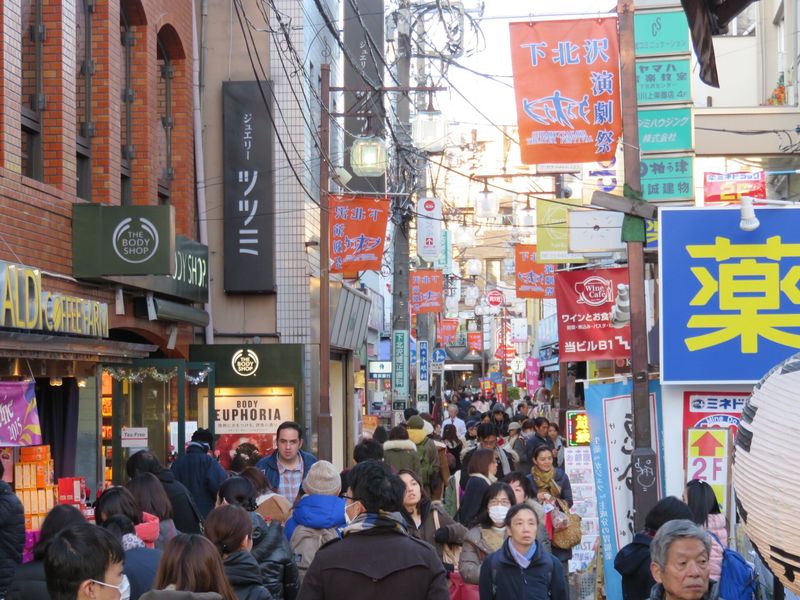
A low-rise, largely car-free maze of vintage clothing, secondhand records, tiny theatres, curry counters and third-wave coffee. Tokyo's bohemia, best with no itinerary and an afternoon to lose.
Tip:Come on a weekday when the vintage shops are calm, and follow the smell of spice to one of the neighbourhood's famous soup-curry joints.
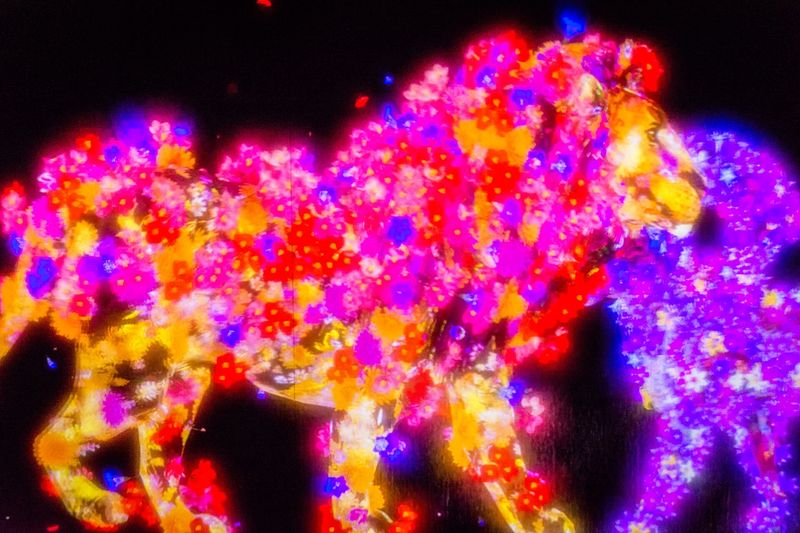
Immersive rooms of projected light, mirrored infinity and interactive water and flowers that have become one of the city's defining draws. Divisive with purists, unforgettable with everyone else.
Tip:Buy timed tickets well in advance, wear something other than a short skirt given the mirrored floors, and go as early as your slot allows to beat the crush.
Maximum Tokyo and the city's best-connected hub — a wall of neon, department stores, and the alley bars of Golden Gai, all sitting on top of the busiest station on earth. Loud, dense, and unbeatable for getting anywhere fast.
Park Hyatt Tokyo
The skyscraper district around the government buildings trades the neon chaos for quiet rooms, city-and-Fuji views, and a short walk to the station.
Younger, fashion-driven and endlessly energetic, radiating from the famous crossing up into the calmer, leafier hills of Ebisu and Daikanyama. Superb transport, great eating and drinking, and a scene that runs late.
Shibuya Excel Hotel Tokyu
A handful of newer towers put you at the centre of the action with skyline rooms; book high to escape the street noise.
The old shitamachi downtown around Sensō-ji temple, with a slower, more traditional feel, craft shops, and river views. Further from the nightlife but atmospheric, cheaper, and full of character.
Prostyle Ryokan Tokyo Asakusa
Sleep on tatami with a communal bath and a river view for a taste of old Tokyo without leaving the city.
The grand, grown-up centre — flagship stores, old department halls, hushed sushi counters and serious hotels, all a walk from Tokyo Station. Polished, expensive, and beautifully central.
Shangri-La Tokyo
The Marunouchi towers deliver flawless service, sky-high bars and shinkansen platforms downstairs — ideal if day trips are on the cards.
Low-rise, bohemian and largely car-free, a warren of vintage shops, coffee bars and tiny theatres a few minutes from Shibuya. Residential and relaxed, for travellers who want to live like a local.
Mustard Hotel Shimokitazawa
New low-key stays have opened as the area gentrifies, putting you in the middle of the vintage-and-coffee scene with an easy hop to central Tokyo.
Affiliate notePostcardRoute is reader-supported. Some links to Booking.com (stays, flights, car hire, tickets and tours, airport transfers) are affiliate links, tracked through CJ Affiliate: if you book through them we may earn a small commission at no extra cost to you. We only recommend places we would send a friend.
Book the restEverything else for the trip
Stay sorted? These open Booking.com for the other legs of the journey.
Affiliate noteThese four links are affiliate links too: if you book through them we may earn a small commission at no extra cost to you.
Beyond the cityWorthwhile day trips
Hakone
A hot-spring town in the mountains with open-air onsen, a lake, an art museum in the hills and, on a clear day, a full view of Mount Fuji. The classic overnight or long-day escape from the city.
Kamakura
An hour south by train to a seaside former capital of temples, wooded hiking trails and the great bronze Buddha sitting in the open air. Easy, green and a world away from the crush.
Nikkō
Two hours north to an extravagant mountain shrine complex of gilded, carved gates set among towering cedars and waterfalls. Best in autumn when the surrounding hills turn to fire.
Five full days is the honest sweet spot — enough to hit the headline neighbourhoods, eat widely, and still leave a day for a trip out to Hakone or Kamakura. Four works if you are disciplined. Three will show you the highlights but leave you certain you have to come back, which, with Tokyo, you almost always do.
What is the best area to stay in Tokyo for first-timers?
Shinjuku or Shibuya. Both sit on the JR Yamanote loop and major subway lines, so you can reach almost anywhere quickly, and both put you in the thick of the eating, shopping and nightlife. Shinjuku is the better-connected transport hub; Shibuya skews younger and more fashion-driven. For a quieter, more traditional and cheaper base, Asakusa is the strong alternative.
Is Tokyo expensive to visit?
Less than its reputation suggests. Hotels and taxis are where costs climb, but eating is a genuine bargain — ticket-machine ramen, rice bowls, izakaya small plates and outstanding convenience-store food all cost a fraction of what similar quality costs in Europe or North America. Ride the trains rather than taxis, eat where the locals eat, and Tokyo delivers enormous value for the money.
Do I need to speak Japanese to visit Tokyo?
No. Signage in the stations and on major streets is bilingual, staff are unfailingly helpful, and the Google Translate camera reads menus in real time. A few words go a long way for goodwill — arigatō for thank you, sumimasen for excuse me — but you can navigate the whole city comfortably in English with a translation app in your pocket.
What is the best time of year to visit Tokyo?
Late March to early April for the cherry blossom, and November for the autumn maples and clear low light, are the two standout windows — both beautiful, both busy. October and May offer mild, dry, uncrowded walking weather. Avoid the mid-June to mid-July rainy season and the humid furnace of August, and expect the whole country to travel during Golden Week in early May and the New Year holiday.
How do I get from the airport into central Tokyo?
From Narita, the Narita Express (N'EX) train runs directly to Shinjuku, Shibuya and Tokyo Station in about an hour, or the cheaper Keisei Skyliner reaches Ueno fast. Haneda is far closer to the centre — the Tokyo Monorail or Keikyu line get you downtown in under half an hour. Buy or top up a Suica card at the airport and tap straight through the gates.
We'd like to use a Meta (Facebook) pixel to see which guides are worth writing more of. It only loads if you say yes — decline and nothing from Facebook ever runs. Details on the Privacy page.