Everyone arrives in Paris carrying someone else's version of it. The postcard skyline, the accordion soundtrack, the idea that romance is something the city hands you at the door. The real Paris is quieter and far more interesting than that. It is a working capital of twenty arrondissements that spiral outward like a snail's shell, each with its own temperament, its own bakery worth crossing the river for, its own reasons to slow down.
This isn't a list of the ten things you must see before you die. You already know about the Tower and the Louvre, and you will visit them, and they will be wonderful and crowded in roughly equal measure. What follows is the other information — where to base yourself so the city feels like yours, when to come so you are not sharing it with the entire planet, and how to move, eat, and behave so that Paris opens up instead of shutting the door.
Give the city time and it repays you generously. Give it a rushed weekend and a packed itinerary and it will feel like a very beautiful theme park. The difference is almost entirely in the pace you choose.
The caseWhy Paris still earns the hype
Cynics like to say Paris is overrated, and they are usually people who tried to do it in forty-eight hours. Seen properly, it remains one of the densest concentrations of good living on earth. In a single afternoon you can stand in front of a Vermeer, eat an éclair engineered with the precision of a Swiss watch, drink a glass of natural wine poured by someone who genuinely cares which hillside it came from, and end up in a park designed to be lounged in rather than looked at.
What makes Paris different from other great capitals is its insistence on the everyday. The pleasures are not locked behind ticket barriers. They are the café terrace, the boulangerie queue, the booksellers' green boxes along the Seine, the simple civic dignity of a city that decided a long time ago that ordinary life should be beautiful. You do not need to spend a fortune to feel it. You need to slow down enough to notice.
The calendarWhen to go
The sweet spots are late spring and early autumn. May and June bring long light evenings, blossom in the parks, and terraces that stay busy until midnight, though you will share the museums with the first big wave of the season. September and early October are arguably better still: the summer crowds thin, the light turns golden, the wine harvest colours the menus, and Parisians return from their August holidays, so the city feels fully switched on again.
August is its own strange animal. Half the city decamps to the coast, and you will find beloved bistros shuttered with hand-written notes taped to the glass, but you will also find a hushed, emptied-out Paris that has a melancholy charm. Winter is underrated for the same reason — museums without queues, cosy wine bars, and a low grey light the Impressionists spent lifetimes chasing. Avoid the second half of July if you can, when heat and peak tourism arrive together.
LogisticsGetting around
Walk first. Paris is deceptively compact — the historic core is barely five kilometres across, and the pleasure of the place is largely at street level, so treat the Métro as a tool for the long hauls rather than a default. When you do go underground, the network is dense, cheap, and easy once you learn to navigate by the name of the last station on each line, which is how every sign is labelled.
Buy a Navigo Easy card at any station and load it with a carnet of ten rides, or a day pass if you are hopping around a lot; contactless bank cards now work on many turnstiles too. The RER regional trains connect both airports and Versailles, but mind the zones. For short hops, the Vélib' bike-share is excellent and the city has poured serious money into protected bike lanes. Skip taxis in the centre unless you are laden with luggage; traffic is slow and the Métro is almost always faster.
The tableHow Parisians actually eat
Forget the tasting-menu temples for a moment. The soul of Parisian eating is the neighbourhood bistro and the corner bakery, and the single best habit you can adopt is to eat where you are rather than trekking across town for a name on a list. Lunch is the great value: many serious kitchens offer a two-course formule at midday for a fraction of the dinner price.
Learn the rhythm. Bakeries are for the morning croissant and the lunchtime sandwich jambon-beurre. The café is for coffee standing at the counter, which is cheaper than sitting, and for the long afternoon apéro. Dinner runs late by some standards — kitchens rarely get going before half past seven. Book anywhere you actually care about, ideally days ahead. And do buy your picnic properly: a wedge of cheese from a fromagerie, a baguette still warm, a bottle from the caviste, eaten on the quai as the light goes. It costs almost nothing and it is the meal you will remember.
The mapNeighbourhoods to know
Paris is best understood as a collection of villages. Le Marais, spread across the 3rd and 4th, is the medieval heart gone effortlessly cool — narrow streets, hidden courtyards, galleries, falafel counters, and some of the best independent shopping in the city. Saint-Germain-des-Prés on the Left Bank trades in literary nostalgia and old-money elegance, all antiquarian bookshops and grand cafés where the coffee costs what the history is worth.
Montmartre, up on its hill in the 18th, still has the crooked-lane romance the postcards promised, if you climb past the tourist crush around the Sacré-Cœur into the quieter streets behind. For a more contemporary, less polished Paris, head east: the Canal Saint-Martin and Belleville are where young Parisians actually drink and eat, cheaper and looser than the postcard districts. Knowing which village suits you is the whole game — and it is the key to choosing where to sleep, which we get to below.
Field intelligencePractical intelligence
A few things that quietly improve every trip. Greet people — a simple bonjour on entering a shop or restaurant is not optional politeness, it is the entire social contract, and skipping it is why some visitors find Parisians cold. Tipping is not expected as it is in the United States; service is included, and rounding up a euro or two for good service is generous, not obligatory.
Museums are free on the first Sunday of many months and often late one evening a week, which is also the best time to visit them crowd-wise. The tap water is excellent and free — ask for une carafe d'eau rather than paying for bottles. Pickpockets work the obvious tourist crush points and the Métro, so keep your phone off the café table's edge and your bag zipped on the platform. And download an offline map: the medieval street plan defeats even good navigators, and getting pleasantly lost is only pleasant when you can find your way back.
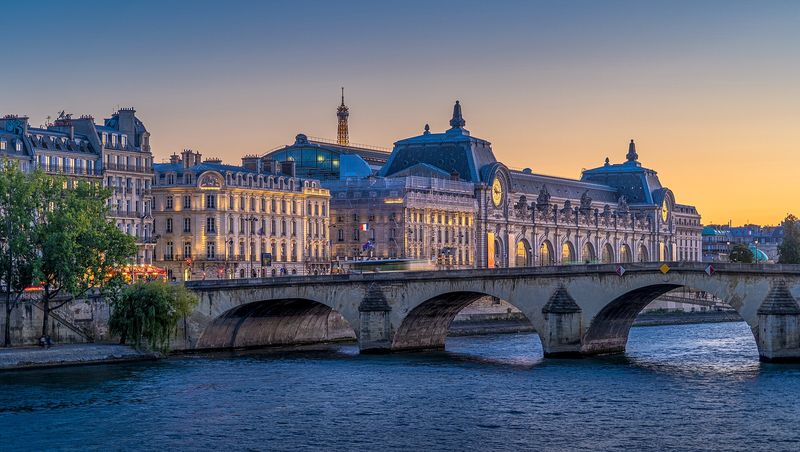
The Impressionists housed in a converted Beaux-Arts railway station, with a giant clock face overlooking the Seine. More manageable and, many argue, more rewarding than the Louvre.
Tip:Go late on Thursday when it stays open until nearly ten and the crowds have thinned to almost nothing.
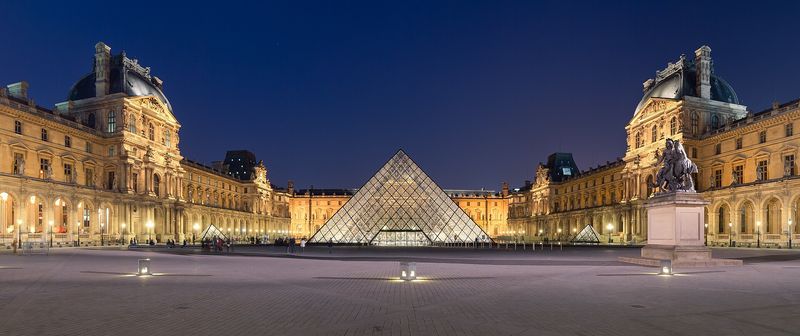
Yes, it is enormous and yes, everyone is photographing the Mona Lisa with their backs to her. Pick two wings, ignore the rest, and treat it as a building to wander rather than conquer.
Tip:Enter via the Porte des Lions or the Carrousel mall entrance to skip the pyramid queue entirely.
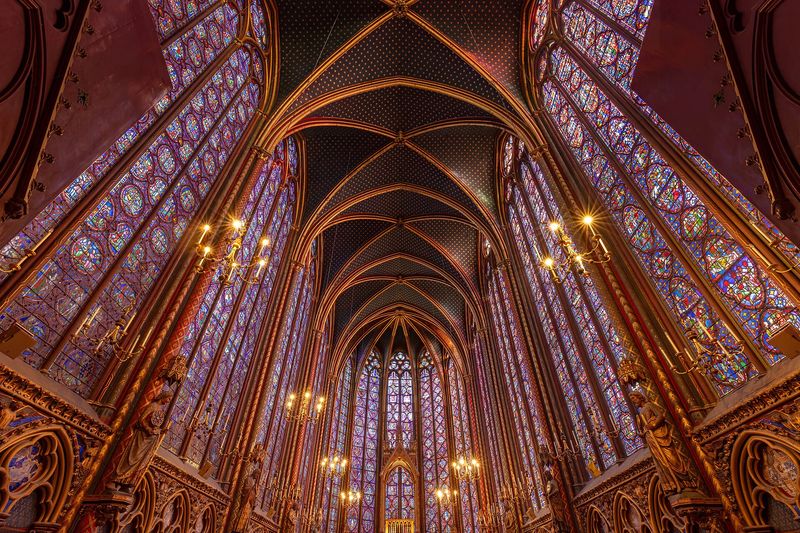
A 13th-century royal chapel that is essentially a jewel box of stained glass — fifteen towering windows that turn the whole upper chapel into shattered coloured light on a bright day.
Tip:Come on a sunny morning; the glass needs direct light to do its impossible thing.
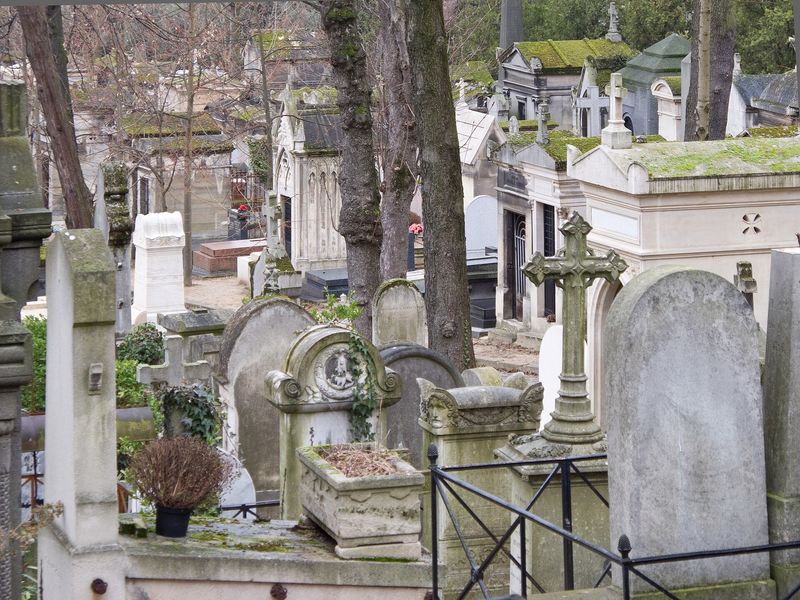
The most atmospheric cemetery in Europe, a cobbled hillside city of the dead where Chopin, Wilde, Piaf and Morrison lie among mossy tombs and old chestnut trees.
Tip:Grab a map at the entrance — it is genuinely a maze, and the best tombs are unmarked from the main paths.
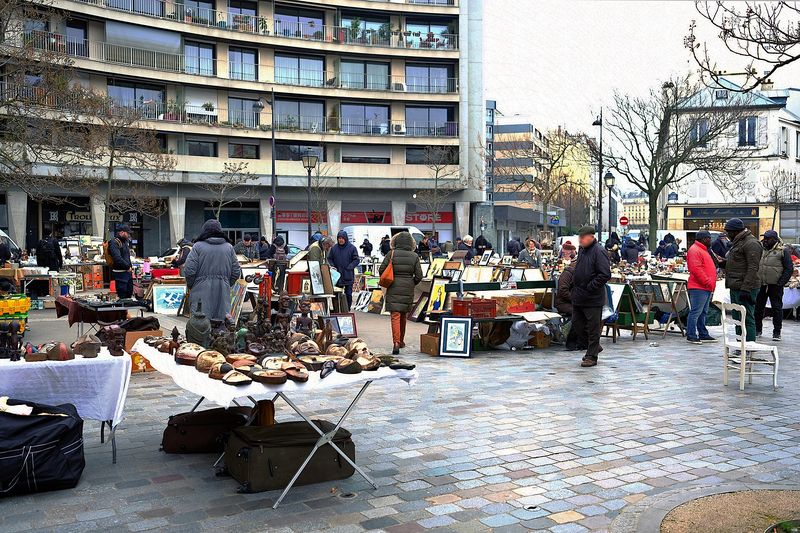
A raucous covered-and-open market in the 12th where real Parisians shop, haggling over produce, cheese and secondhand junk, then decamp to the wine bar Le Baron Rouge next door.
Tip:Arrive before noon on a weekend for the full theatre, and eat oysters standing at a barrel outside.
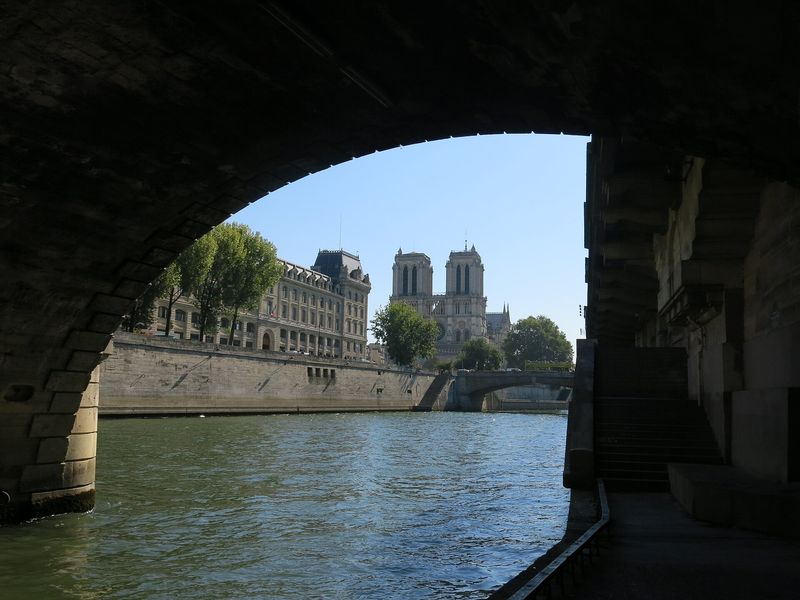
The riverbanks are a UNESCO site and the city's living room — the lower quays are pedestrianised in stretches, perfect for a wander, a picnic, or watching the bateaux slide past at dusk.
Tip:The stretch below the Institut du Monde Arabe is quieter and has some of the best sunset angles on Notre-Dame.
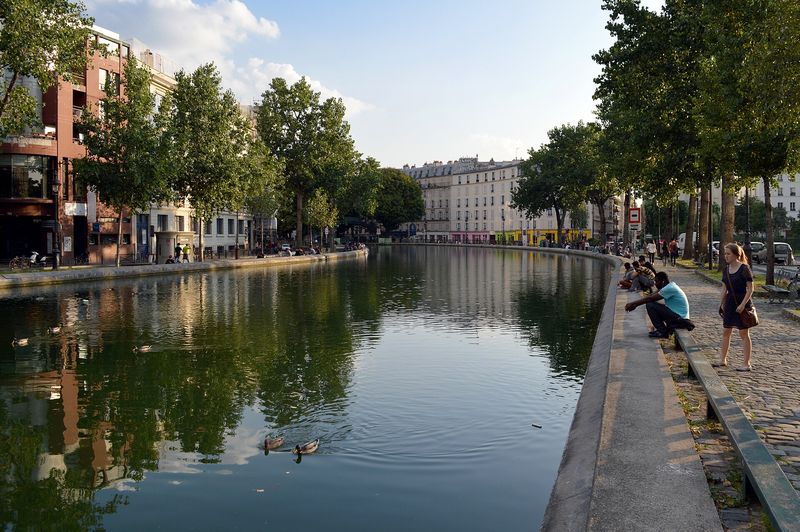
Tree-lined water crossed by iron footbridges, flanked by independent shops, coffee roasters and casual wine bars. On warm evenings the whole neighbourhood picnics along the banks.
Tip:Skip the daytime and come at aperitif hour; this is an evening neighbourhood at heart.
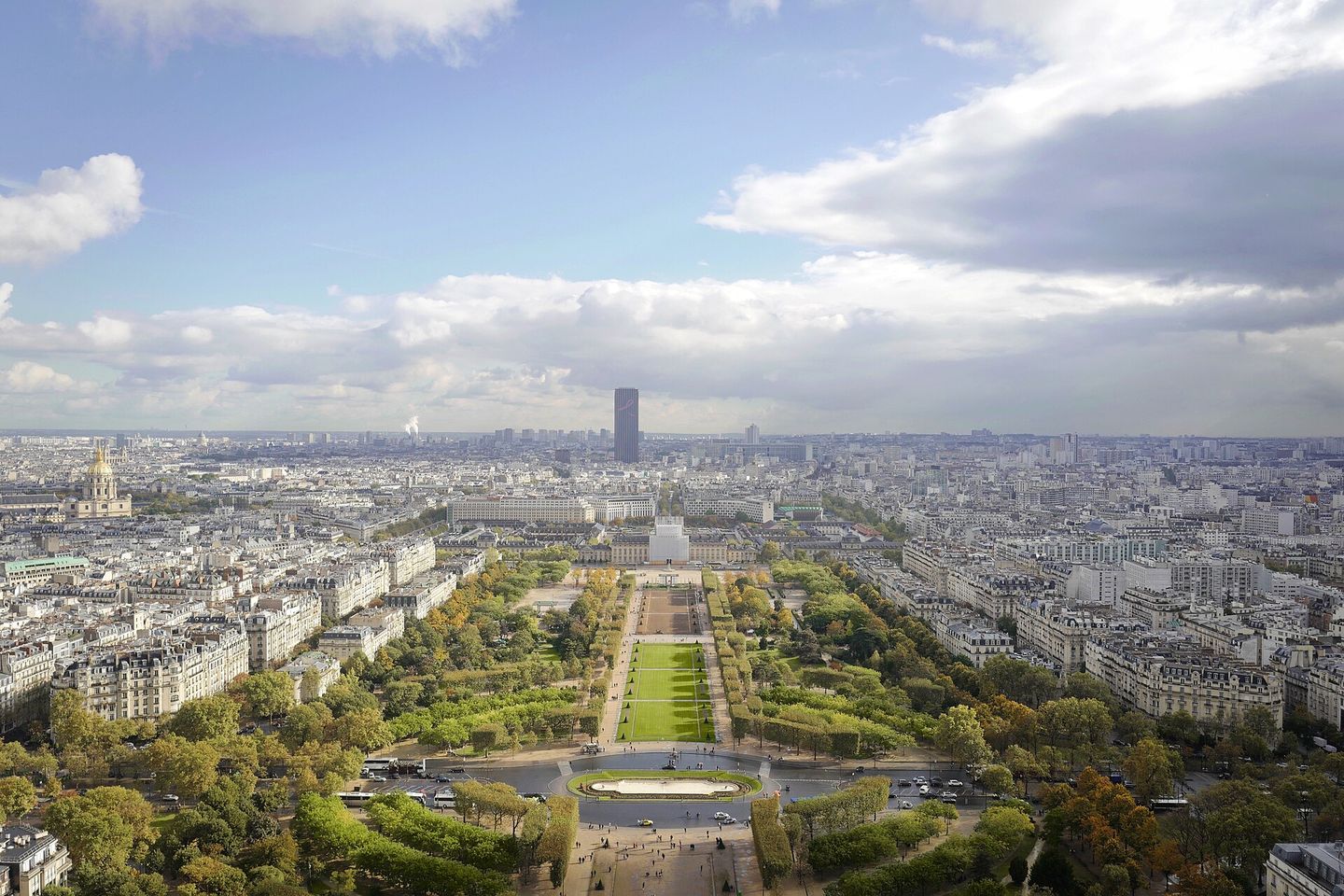
Gustave Eiffel's 1889 iron lattice is the one landmark every visitor actually expects to see in person, and it earns the queue — the view from the second floor over the Champ de Mars and the rooftops beyond is the one no photograph quite prepares you for.
Tip:Book a timed ticket online weeks ahead and choose the stairs to the second floor; lift tickets bought on the day can mean a queue of two hours or more.
Europe's biggest theme park, forty minutes east of the city by train, and the single most-visited attraction in France by a wide margin — full-scale Disney spectacle transplanted onto the wheat fields of Seine-et-Marne.
Tip:Take the RER A directly from central Paris rather than a coach transfer, and buy park tickets online in advance to skip the gate queue.
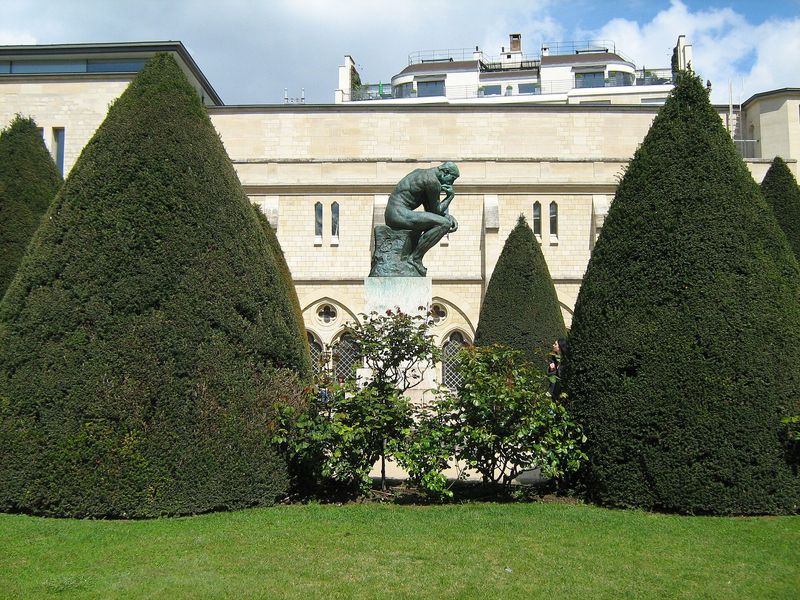
A serene mansion and sculpture garden where The Thinker broods among the roses. The garden ticket alone is a bargain and one of the calmest green corners in the centre.
Tip:Bring a book and a coffee — the garden benches are the point, not just the marble.
The medieval quarter turned effortlessly stylish — cobbled lanes, hidden courtyards, boutiques, and the best walkable density of galleries, bars and falafel in the city. Central to almost everything.
A boutique hotel on a quiet Marais side street
Look for a small design-led hotel off the busy rue des Rosiers so you get the location without the late-night noise.
Left Bank elegance and literary ghosts — antiquarian bookshops, grand cafés, and a genteel calm. It costs more, but you are buying one of the loveliest strolls in Paris on your doorstep.
A grande-dame hotel near the Odéon
The 6th is where old Paris still performs itself; expect polish, service, and a price to match.
Village-on-a-hill romance with real crooked-lane charm once you climb behind the Sacré-Cœur crush. Steeper, further out, and cheaper for it — best if you like a neighbourhood that feels lived-in.
A hillside hotel in the quiet 18th
Stay on the northern, less touristy slope for morning quiet and postcard views without the day-tripper scrum.
Younger, looser, and better priced — this is where creative Paris eats and drinks. Fewer monuments on the doorstep, but the most genuine neighbourhood energy in the city and easy Métro links west.
A modern hotel near République
République is a transit hub with lines fanning across the city, so you trade postcard views for unbeatable connections and lower rates.
Affiliate notePostcardRoute is reader-supported. Some links to Booking.com (stays, flights, car hire, tickets and tours, airport transfers) are affiliate links, tracked through CJ Affiliate: if you book through them we may earn a small commission at no extra cost to you. We only recommend places we would send a friend.
Book the restEverything else for the trip
Stay sorted? These open Booking.com for the other legs of the journey.
Affiliate noteThese four links are affiliate links too: if you book through them we may earn a small commission at no extra cost to you.
Beyond the cityWorthwhile day trips
Versailles
The absurd, magnificent seat of the Sun King — go early, make straight for the gardens, and rent a bike or a rowboat on the Grand Canal to escape the palace crush.
Giverny
Monet's garden and its famous lily pond, best in late spring and summer. A short train to Vernon and a shuttle, and an easy half-day of pure colour.
Chartres
An hour by train to one of the greatest Gothic cathedrals in the world, with stained glass that survived eight centuries largely intact. Quiet, and utterly worth it.
Four full days is the honest minimum to see the headline sights and still have time to wander a couple of neighbourhoods at a Parisian pace. Three works if you are disciplined. A single packed weekend will show you the monuments but not the city — and it is the city that people fall in love with.
What is the best area to stay in Paris for first-timers?
Le Marais (the 3rd and 4th arrondissements). It is genuinely central, endlessly walkable, packed with cafés, shops and galleries, and well connected by Métro, so you can reach almost every major sight on foot or in a few stops. Saint-Germain-des-Prés on the Left Bank is the classic, slightly pricier alternative.
Is Paris expensive to visit?
It can be, but it does not have to be. Accommodation and sit-down dinners are where costs climb. Eat lunch from the fixed-price formules, picnic from markets and bakeries, drink coffee at the counter, use free museum evenings, and take the Métro rather than taxis, and Paris becomes a surprisingly affordable city for how much pleasure it delivers.
Do I need to speak French to visit Paris?
No, but a few words transform the experience. Always open with bonjour, add merci and s'il vous plaît, and ask parlez-vous anglais before switching to English. Parisians have a reputation for coldness that is mostly a reaction to visitors skipping these basic courtesies. Make the small effort and the city warms considerably.
What is the best time of year to visit Paris?
Late spring (May to June) and early autumn (September to early October) are the sweet spots — pleasant weather, long light, and manageable crowds. August empties out as locals leave and many restaurants close, while winter offers queue-free museums and cosy wine bars for those who do not mind the grey.
How do I get from the airport into central Paris?
From Charles de Gaulle, the RER B train is the fastest reliable option into the centre, roughly 35 to 45 minutes, avoiding road traffic. From Orly, the Orlyval shuttle connects to the same RER B line, or the newer tram and Métro extensions. Fixed-price official taxis exist too, but budget for traffic and a higher fare.
We'd like to use a Meta (Facebook) pixel to see which guides are worth writing more of. It only loads if you say yes — decline and nothing from Facebook ever runs. Details on the Privacy page.