
United States · Tennessee
Nashville, off Broadway
The strip downtown is the loudest four blocks in the South. The city worth your time is the one built around it — a working music town with better bars a mile away in any direction.
Music City works harder than the bachelorette parties suggest · 36.16° N · 86.78° W
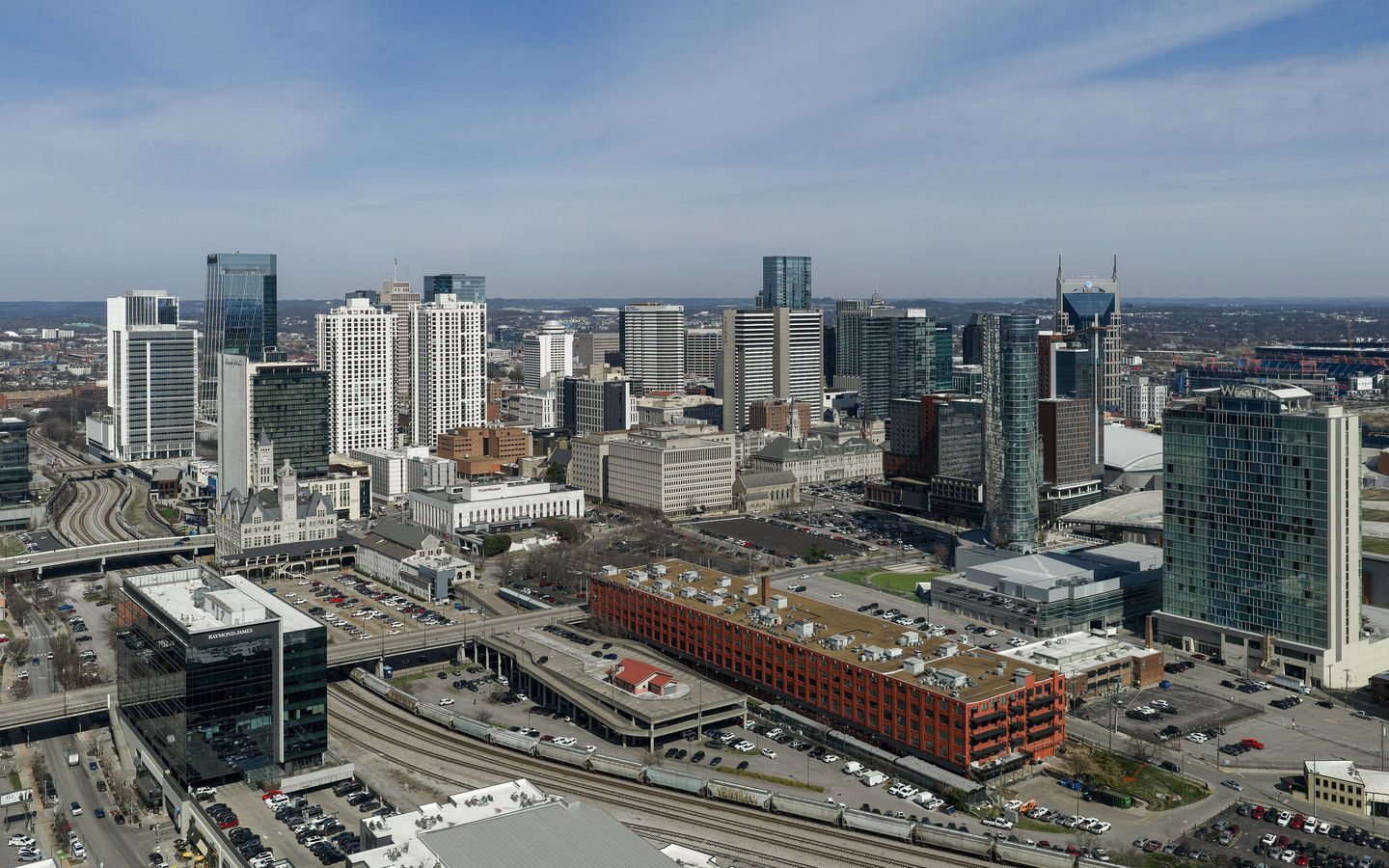
Nashville has spent the last fifteen years becoming a punchline as often as a pilgrimage — bachelorette parties on pedal taverns, a skyline sprouting cranes, Broadway turned into a four-block strip of rooftop bars blasting the same twenty country hits on a loop. All of that is real, and none of it is the reason the city has been a serious music town for a century. Nashville is where the Grand Ole Opry has broadcast since 1925, where Music Row's studios cut records that defined entire genres, and where a working songwriter can still get a slot at a Monday night round at the Bluebird Cafe. The tourist strip and the actual music city are two different places that happen to overlap on a map.
The trick to visiting well is understanding that Broadway is a spectacle worth seeing once and not a destination worth basing a trip around. The city's real texture is in the neighbourhoods that ring downtown — East Nashville's bungalow streets and dive bars, Germantown's restored row houses and restaurants, 12 South's boutiques and biscuit lines, The Gulch's glass towers built on old rail yards. Each has its own bars, its own kitchens, and its own version of live music that has nothing to do with cover bands playing to a bachelorette party on a balcony.
This guide treats Nashville as what it actually is: a mid-sized Southern capital with a genuinely deep music and food culture, currently absorbing a decade of explosive growth without losing its footing entirely. It skips the itinerary-by-numbers approach in favor of specifics — which honky-tonks on Broadway are worth the cover, where hot chicken is more than a novelty, which neighbourhood to sleep in depending on what kind of trip you're taking, and when to come so the humidity doesn't flatten you by 10am.
The caseWhy Nashville earns the trip, and where the hype overshoots
The honest case for Nashville has nothing to do with Broadway and everything to do with density. Within a few square miles you have the Country Music Hall of Fame doing serious archival work on American music history, the Ryman Auditorium — the old Mother Church of country music, with pew seating and acoustics good enough that touring rock bands still fight to play there — and a working songwriter scene that fills small rooms on weeknights with people trying out songs that might end up on the radio in two years. That infrastructure, built over a century, is not something other boomtowns can fake.
The overshoot is Broadway itself, at least after dark on a weekend. Four blocks of honky-tonks stacked three floors high, each with a house band playing the same crowd-pleasing set of covers, packed with bachelorette parties in matching shirts and pedal taverns blocking traffic — it is genuine spectacle, worth walking through once for the sensory overload, but it is not where Nashville's music culture actually lives anymore. Treat it as a tourist attraction rather than a nightlife plan, see it early evening before it turns into a scrum, and spend your other nights in East Nashville or at a proper listening room instead.
The calendarWhen to go
Spring and fall are the sweet spots, and it is not close. April through early June brings mild temperatures, blooming dogwoods, and a packed festival calendar without the brutal humidity that defines a Nashville summer. September through early November delivers the same trade — warm days, cool evenings, and the added bonus of college football season turning the city's bar scene up several notches on Saturdays.
Summer (June through August) is genuinely rough: heat in the 90s Fahrenheit paired with Southern humidity that makes walking Broadway at 2pm feel like a chore, though it is also peak season for outdoor concerts at Ascend Amphitheater and the riverfront. Winter is underrated and cheap — hotel rates drop, the honky-tonks are still going, and a light dusting of snow on the Ryman is a genuinely pretty sight, though a handful of days each January bring real cold snaps. Avoid CMA Fest in June unless you specifically want it: it triples downtown's population for four days and prices hotels accordingly, which is either exactly your trip or the opposite of it.
LogisticsGetting around
Nashville is a car city that has been trying, with mixed success, to become something else. There is no subway or light rail — the WeGo bus network covers the metro area but runs infrequently outside a few core routes, and the WeGo Star commuter train only really serves suburban commuters, not visitors. If your whole trip is downtown, Germantown, and The Gulch, you can walk or rideshare between them without much trouble; venture further to East Nashville, 12 South, or Belle Meade and you'll be relying on rideshare or a rental car for most trips.
Renting a car makes sense if you're staying more than a few days or plan day trips outside the city, but be honest with yourself about downtown parking, which is expensive and often full during any event. Rideshare (Uber and Lyft) is the default for most visitors moving between neighbourhoods at night, and it is generally reasonably priced outside of surge pricing around major events. The pedal taverns and party bikes clogging lower Broadway on weekend afternoons are a spectacle to watch, not a transportation option to take seriously — they move at a crawl and exist purely for the bachelorette-party experience.
The tableHow Nashville actually eats
Hot chicken is the dish that put Nashville on the food map nationally, and it deserves the reputation if you approach it right. The style originated at Prince's Hot Chicken, reportedly born from a jilted girlfriend's revenge recipe turned into a beloved institution, and the format has since spread across a dozen serious operators with wildly different heat philosophies. The honest advice: start at a medium heat level even if you consider yourself heat-tolerant, because Nashville hot is built around cayenne-heavy oil rubbed directly into fried skin, not a sauce you can wipe off, and the higher tiers at places like Hattie B's or Prince's are genuinely punishing rather than fun.
Beyond hot chicken, Nashville's food scene has grown up considerably in the last decade. Meat-and-three restaurants — cafeteria-style Southern kitchens where you pick one protein and three sides from a rotating steam-table menu — are the city's most distinctly local institution and worth seeking out over any trendier option; Arnold's Country Kitchen is the best-known survivor of a dying format. Biscuit culture runs deep too, especially around 12 South. And the city's fine-dining and chef-driven scene, concentrated in Germantown and The Gulch, has become genuinely serious, pulling James Beard attention for restaurants that have nothing to do with country music or tourism at all. Reservations matter at anywhere well regarded on a weekend.
The mapNeighbourhoods to know
Downtown and Broadway are the tourist core — honky-tonks, the Ryman, the Country Music Hall of Fame, and the new hockey and football stadiums nearby. It is worth a day and a night, not a whole trip; hotel rates here run high for what is mostly a nightlife district rather than a place people actually live.
East Nashville, across the Cumberland River, is where the city's creative and music community actually settled once downtown got expensive — bungalow-lined streets, genuinely good dive bars, and a live-music scene built around small rooms rather than tourist stages. Germantown, just north of downtown, restored its 19th-century row houses into one of the best concentrations of serious restaurants in the city, all within an easy walk of each other. The Gulch is the glossy new-money district built on old rail yards — glass condo towers, upscale shopping, a genuinely walkable core, and prices to match. 12 South is boutique-and-biscuit territory, a strollable strip of shopping and brunch spots that has become one of the most photographed streets in the city thanks to a mural wall. Further out, Belle Meade holds the old-money mansions and is worth a half-day for the Belle Meade Historic Site if you care about antebellum plantation history, though it is a quiet residential area rather than a place to base yourself.
Field intelligencePractical intelligence
Tennessee has no state income tax, which locals will mention unprompted, but sales tax on everything including restaurant meals runs high, close to ten percent in Nashville proper — factor that into your budget rather than being surprised by it at the register. Tipping follows standard American convention: 18 to 20 percent at sit-down restaurants and bars, a dollar or two per drink at a bar counter.
Downtown and Broadway are safe but chaotic on weekend nights, dense with visibly intoxicated crowds moving between bars; keep the usual city-centre awareness of your phone and bag, and know that pedal-tavern traffic can make crossing the street slower than you'd expect. Nashville International Airport (BNA) sits about ten miles southeast of downtown, a 20 to 30 minute rideshare depending on traffic, with no train connection. The city is deep in the Bible Belt, which shapes some practical details worth knowing: liquor stores close on Sundays and some are closed Sunday-Monday both, though bars and restaurants can still serve alcohol. And bring comfortable shoes — much of the appeal here is walking a neighbourhood's few blocks slowly rather than checking off spread-out sights.
What to see & do
-
Country Music Hall of Fame and Museum
A genuinely serious archival institution, not a tourist trap — vast collections tracing country music from its Appalachian roots through Nashville's studio era to today, including Cadillacs, handwritten lyrics, and stage costumes.
Tip:Budget at least two and a half hours; the museum is far bigger than it looks from the entrance and the special exhibits rotate frequently.
-
Ryman Auditorium
The former home of the Grand Ole Opry and still the most storied room in country music, a converted 1892 gospel tabernacle with pew seating and acoustics good enough that major acts across every genre still fight to play here.
Tip:See a show if the schedule allows it rather than just the daytime tour — the room sounds completely different full and lit for a performance.
-
Grand Ole Opry House
The Opry radio show's current home, a purpose-built venue out near Opryland that still airs its legendary live broadcast, mixing country legends with rising acts in the same set the way it has for a century.
Tip:Backstage tours run during the day, but the real experience is a Friday or Saturday night broadcast — book weeks ahead in peak season.
-
Broadway honky-tonks
The four-block strip of multi-story bars with live house bands playing nonstop, from Tootsie's Orchid Lounge to Robert's Western World — genuine spectacle, no cover most nights, but expect a bachelorette-party crush after dark.
Tip:Go in the late afternoon on a weekday for the music without the weekend crowd crush, and tip the band — that's how they're actually paid.
-
The Bluebird Cafe
A tiny, unglamorous strip-mall listening room in Green Hills where the city's actual songwriter culture happens — in-the-round sets where you hear songs before they become hits, with a strictly enforced silence-during-performance policy.
Tip:Reservations go fast online; the walk-up line for a handful of remaining seats starts hours before doors.
-
Belmont Mansion & 12 South
An antebellum Greek Revival mansion turned museum, a few blocks from 12 South's boutique-and-biscuit strip and its famous 'I Believe In Nashville' mural wall.
Tip:Pair the mansion tour with brunch on 12 South and treat it as a single, walkable half-day.
-
Cheekwood Estate & Gardens
A 1930s Georgian mansion set in 55 acres of botanical gardens and rotating sculpture installations, a genuinely peaceful contrast to downtown's noise.
Tip:Come for a seasonal display — the spring bulb show and the autumn pumpkin installation are both worth timing a visit around.
-
Nashville Farmers' Market
A working market by the State Capitol with produce stalls, an international food hall, and a genuinely local crowd rather than a tourist-facing version.
Tip:Go for lunch at the food hall on a weekday and skip the weekend crowds if you just want a quick, good, cheap meal.
-
Cumberland River Greenway & Ascend Amphitheater
A riverside path connecting downtown parks with skyline views, home to the outdoor amphitheater that hosts the city's biggest summer concerts.
Tip:Walk or bike the stretch near sunset for the best light on the AT&T Building's twin spires across the water.
-
Johnny Cash Museum
A compact, well-curated single-artist museum tracing Cash's life and career through instruments, outfits and recordings, a few blocks off Broadway.
Tip:It's small enough to do in an hour, making it an easy add-on before or after a Broadway walk.
On the groundWhere things are
Map data © OpenStreetMap contributors.
Where to stayBase yourself well
Downtown / Broadway
Best for first-timers who want everything walkable and don't mind the noiseThe tourist core — honky-tonks, the Ryman, and the new stadiums, all within stumbling distance of each other. Loud at night, convenient for a short trip, and priced accordingly.
A high-rise hotel near Lower Broadway
Puts you steps from the honky-tonks and the Ryman, but ask for a room on a high floor away from the street to actually sleep.
€€€A chain hotel near the convention center
Slightly quieter than a Broadway-facing room while staying an easy walk from downtown's main sights.
€€The Gulch
Best for a quieter, more modern base near the actionGlass condo towers on old rail yards, genuinely walkable, with upscale shopping and restaurants — polished, a little corporate, and a short walk or rideshare from downtown.
A boutique hotel among the Gulch high-rises
Trades honky-tonk proximity for a calmer night's sleep and better restaurants on your own block.
€€€East Nashville
Best for repeat visitors who want the real neighbourhood sceneBungalow streets, dive bars, and the city's actual creative and music community, across the river from downtown. Fewer chain hotels, more character, and a short rideshare from the tourist core.
A restored bungalow guesthouse near Five Points
East Nashville runs more short-term rentals than hotels; a bungalow near Five Points puts you in walking distance of the best bars in the neighbourhood.
€€A boutique inn near Main Street
Slightly quieter residential streets, still a short walk to East Nashville's restaurant row.
€€Germantown
Best for food-focused trips and a calmer evening baseRestored 19th-century row houses turned into the city's best concentration of serious restaurants, an easy walk north of downtown with a genuinely residential feel after dark.
A small inn among Germantown's row houses
Few hotels sit directly in Germantown itself, so this typically means a short-term rental in a restored row house — book early.
€€€12 South
Best for a laid-back, walkable neighbourhood away from Broadway's noiseBoutique-and-biscuit strip a couple of miles south of downtown, strollable and photogenic, with a younger, more residential energy than the tourist core.
A short-term rental near the 12 South mural wall
Puts you in walking distance of the neighbourhood's best brunch spots; expect a rideshare for anything downtown.
€€Affiliate notePostcardRoute is reader-supported. Some links to Booking.com (stays, flights, car hire, tickets and tours, airport transfers) are affiliate links, tracked through CJ Affiliate: if you book through them we may earn a small commission at no extra cost to you. We only recommend places we would send a friend.
Book the restEverything else for the trip
Stay sorted? These open Booking.com for the other legs of the journey.
-
Tours & tickets
Things to do in Nashville
Skip-the-line tickets, tours and day trips.
Browse activities -
Wheels
Car hire in Nashville
Compare pick-up points and rental companies.
Compare cars -
Air
Flights
Search fares, then come back for the neighbourhood advice.
Search flights -
Ground
Airport transfers
Book a taxi or private transfer before you land.
Book a transfer
Affiliate noteThese four links are affiliate links too: if you book through them we may earn a small commission at no extra cost to you.
Beyond the cityWorthwhile day trips
- Franklin
A well-preserved small-town Civil War-era downtown about 20 miles south, with a genuinely charming Main Street of boutiques and restaurants and the Carnton and Carter House historic sites.
- Jack Daniel's Distillery, Lynchburg
About 75 miles southeast, the oldest registered distillery in the US runs tours through its charcoal-mellowing process in a dry county that, ironically, cannot sell you a drink on-site in every county nearby.
- Land Between the Lakes
A sprawling national recreation area roughly two hours northwest, straddling the Kentucky border, good for a full day of hiking, a bison and elk prairie drive, and genuine quiet after a few days of downtown noise.
Before you goCommon questions
- How many days do you need in Nashville?
- Three full days covers downtown, the Ryman, a proper night in East Nashville, and a food-focused evening in Germantown or 12 South. Four or five lets you add a day trip to Franklin and a slower pace through the museums without rushing.
- Is Broadway worth visiting if I don't like bachelorette-party crowds?
- Once, yes — go in the late afternoon on a weekday when the house bands are still playing but the weekend crush hasn't arrived. For actual nightlife, though, East Nashville's bars and a proper listening room like the Bluebird Cafe deliver a much better night than fighting for space on a Broadway balcony.
- What is the best area to stay in Nashville?
- Downtown or The Gulch if you want everything walkable and don't mind noise and higher prices. East Nashville or Germantown if you'd rather sleep somewhere with real neighbourhood character and don't mind a short rideshare to the honky-tonks.
- When should I avoid visiting Nashville?
- Peak summer (June to August) brings brutal heat and humidity, and CMA Fest in mid-June triples downtown's crowds and hotel rates. Unless one of those is specifically your trip, aim for April to early June or September through early November instead.
- How hot is Nashville hot chicken, really?
- Genuinely hot at the upper tiers — this isn't a marketing gimmick. Start at a medium heat level even if you handle spice well; the cayenne-forward oil is rubbed directly into the fried skin rather than served as a dippable sauce, and the top tiers at places like Prince's or Hattie B's are built to punish, not to please.
- Do I need a car in Nashville?
- Not if you're staying downtown, in The Gulch, or Germantown and mostly walking or using rideshare. If you want to properly explore East Nashville, 12 South, Belle Meade, or take day trips to Franklin or beyond, a rental car or reliable rideshare budget makes the trip considerably easier — public transit is limited outside a few core routes.
- How do I get from the airport into Nashville?
- Nashville International Airport (BNA) sits about ten miles southeast of downtown. There's no train connection, so a rideshare or taxi is the standard option, typically 20 to 30 minutes depending on traffic and event schedules downtown.