
United States · Florida
Miami, past the postcard
Ocean Drive is the photograph. The city that actually holds your attention is the one speaking Spanish over dominoes, hanging murals on a former warehouse district, and paddling a kayak through a mangrove tunnel forty minutes from the club district.
America's only tropical metropolis, and its most misread · 25.76° N · 80.19° W
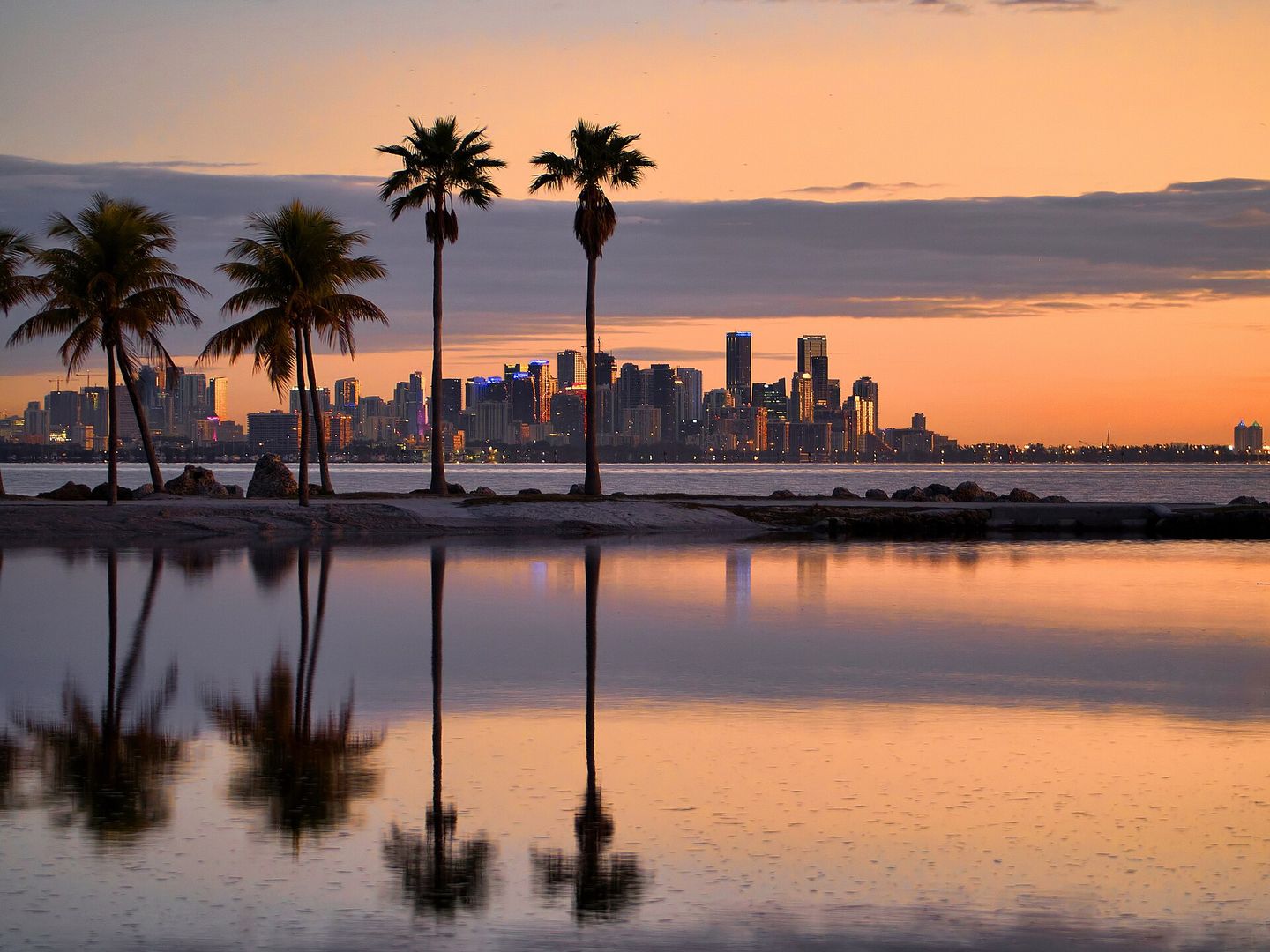
Miami has an image problem it partly engineered itself: pastel Art Deco facades, a strip of Ocean Drive built for Instagram, and a reputation for shallow glamour that the city has been happy to sell to anyone who wants to buy it for a weekend. That version of Miami exists, and if that is what you came for, it delivers reliably. But it is also the least interesting eighteen blocks of a metro area that runs from the Everglades to the Atlantic and holds, depending on how you draw the lines, well over six million people across Miami-Dade and its neighbours — most of them not thinking about South Beach at all.
The more accurate description of Miami is the northernmost city in the Caribbean, or the unofficial capital of Latin America, and both of those get closer to what actually makes the place distinctive. More than half the population of Miami-Dade County speaks Spanish at home, and the city's rhythm — the coffee windows, the volume of conversation, the hour dinner starts, the loyalty to specific bakeries and specific domino tables — is shaped far more by Havana, Caracas, Bogotá and Port-au-Prince than by New York or anywhere else people assume defines American urban culture. That is not a footnote to the Miami experience. For most of the metro area, it is the whole of it.
What follows treats the beach as one neighbourhood among several rather than the entire trip. Wynwood's warehouse murals, Little Havana's cafecito windows, Coral Gables' Mediterranean boulevards, and the mangrove-and-limestone landscape of the Everglades an hour inland are not detours from Miami — they are the parts that explain why people who actually live here rarely go near Ocean Drive except to walk a visiting friend down it once, out of duty, before taking them somewhere better.
The caseWhy Miami is more than its skyline
The honest pitch for Miami starts with the fact that it does not resemble any other major American city, and the reasons are geographic and demographic rather than architectural. It is built on a narrow shelf of limestone between Biscayne Bay and the Everglades, in a subtropical climate shared with almost nowhere else in the continental United States, which means the palm trees, the afternoon thunderstorms, the humidity and the mangroves are not decoration — they are the actual ecology the city sits inside, and they shape everything from the architecture to the pace of the day.
On top of that geography sits a population that arrived, overwhelmingly, within living memory and mostly from somewhere else in the hemisphere: Cuban exiles after 1959, Nicaraguans in the 1980s, Venezuelans and Colombians more recently, plus long-established Haitian, Jamaican and Bahamian communities that predate most of the boom. The result is a city where you can eat Peruvian ceviche, Cuban ropa vieja and Haitian griot within three blocks of each other, all cooked by people who learned the recipes at home rather than from a cookbook, and where the art scene, the music and the design world are working through a genuinely hemispheric set of influences rather than importing a single borrowed aesthetic.
Then there is what the last two decades did to the built environment. Wynwood went from a garment-district backwater to one of the most photographed street-art districts on earth. The Design District turned a stretch of showrooms into an open-air luxury and architecture quarter with buildings by Herzog & de Meuron and Sou Fujimoto standing next to each other. The Pérez Art Museum Miami and the Phillip and Patricia Frost Museum of Science anchor a genuinely serious museum park on the bay. None of that erases the beach-resort version of the city — it exists in parallel, and both versions are real. The point is that Miami rewards the visitor willing to leave the sand for an afternoon considerably more than its reputation suggests.
The calendarWhen to go
Miami runs on two seasons, not four, and the difference between them should genuinely decide when you book. The dry season, roughly November through April, is when almost every trip should happen: daytime highs in the comfortable mid-to-high 70s and low 80s Fahrenheit, low humidity by local standards, minimal rain, and hurricane risk essentially off the table. This is also, unsurprisingly, when the city is busiest and priciest — hotel rates in January and February run well above the summer floor, and December brings Art Basel Miami Beach, the art fair that takes over the entire city's calendar and its hotel inventory for a week.
The wet season, June through October, is Miami's actual summer and it is a harder sell: highs regularly clear 90°F with humidity that makes it feel closer to 100, near-daily afternoon thunderstorms that are intense but usually brief, and the Atlantic hurricane season running officially from June 1 to November 30, with the statistical peak in September. None of that makes summer a bad time to visit outright — hotel rates drop substantially, the beach and pool culture the city is built around is in full swing, and a fast-moving afternoon storm is rarely more than an hour's inconvenience — but it does mean checking the tropical outlook before you book and building flexibility into any trip planned inside that window.
The sweet spot within the dry season is arguably March through early May or late October through November: still warm, still mostly dry, and meaningfully cheaper and calmer than the December-to-February peak. Spring break, concentrated in March, is worth actively avoiding if you are not looking for it — South Beach in particular gets loud, crowded and expensive in ways that have little to do with the rest of the city's character.
LogisticsGetting around
Miami is not a walking city the way Boston or Manhattan are, and accepting that early saves a lot of frustration. The metro area sprawls across low-density suburbs connected by wide arterial roads, and most neighbourhoods worth visiting are walkable within themselves but not to each other. Plan on a car, a rideshare, or a combination of transit and rideshare rather than assuming you can stroll from Wynwood to South Beach — it is roughly five miles and not a pleasant walk in the heat.
That said, downtown and Brickell have a genuinely useful free option: the Metromover, an elevated automated people-mover that loops continuously through the financial district and connects to Metrorail, the heavier elevated line running northwest to south along a single corridor toward Coconut Grove, Coral Gables and the airport. If your trip stays concentrated in downtown, Brickell and a Metrorail-adjacent stretch, you can genuinely skip a car. Miami Beach itself is compact and walkable or bikeable once you are there, and the Beach Trolley runs free routes the length of the island.
For everything else — Wynwood to Little Havana, Coral Gables to the beach, any day trip toward the Everglades or the Keys — rideshare or a rental car is the practical answer. Uber and Lyft are dense and reliable across the metro. If you rent a car, budget for parking costs on South Beach and in the Design District, both of which charge seriously for it, and know that Miami traffic on the causeways connecting the mainland to the beach gets genuinely bad at rush hour and on summer weekend evenings. Miami International Airport sits inland, roughly equidistant from downtown and the beach, with rideshare and taxi the fastest way in; there is no direct rail link to the beach from the airport.
The tableHow Miami actually eats
Start with coffee, because it structures the day here more than anywhere else in the country. The cafecito — a shot of sweet, intensely reduced Cuban espresso — is ordered at walk-up ventanitas, street-facing coffee windows built into the side of countless Cuban and Latin American restaurants, and the ritual of stopping at one mid-morning or mid-afternoon is closer to a civic habit than a caffeine run. Order a cafecito for yourself or a colada, the larger shareable version poured into small plastic cups for whoever happens to be standing around, which is a genuine Miami social gesture rather than a tourist performance.
Cuban food is the anchor of Miami's culinary identity but not remotely the whole of it. A proper Cuban meal means ropa vieja (shredded braised beef in tomato sauce), lechón asado (roast pork, usually with mojo and garlic), moros y cristianos (black beans and rice), and a Cuban sandwich pressed hot on a plancha — order all of it at an unpretentious neighbourhood spot rather than a tourist-district version, since the good ones cost less and taste considerably better. Beyond Cuban, the city's Latin American range is genuinely deep: Peruvian ceviche and lomo saltado, Venezuelan arepas, Colombian bandeja paisa, Nicaraguan gallo pinto, and a serious Haitian food scene concentrated in and around Little Haiti, built on griot (fried pork), soup joumou and diri ak djon djon.
Seafood is the other pillar, and stone crab claws are the dish worth planning a trip around if the timing lines up — Florida stone crab season runs mid-October through early May, and the claws are harvested sustainably (one claw is removed and the crab is returned to the water to regrow it), served chilled with mustard sauce. Key lime pie, genuinely native to South Florida rather than a generic Florida cliché, is worth seeking out from a bakery that actually uses key limes rather than bottled substitute juice. And Miami's fine-dining and cocktail scenes, concentrated in the Design District, Brickell and increasingly Wynwood, have become genuinely ambitious over the last decade, pulling in serious chefs from Latin America, Spain and beyond rather than importing a generic international playbook.
The mapNeighbourhoods to know
Miami Beach and South Beach are the barrier island most visitors picture: the Art Deco Historic District along Ocean Drive and Collins Avenue, the largest concentration of 1920s-40s Art Deco architecture anywhere, plus the nightlife strip, the beach itself, and the more residential, quieter stretch of North Beach further up the island. Ocean Drive proper is loud, touristy and overpriced by local standards; a block or two inland on Collins or Washington gets you the same architecture with better food and prices.
Wynwood, on the mainland northwest of downtown, is a former warehouse and garment district turned into one of the most concentrated street-art destinations in the world, anchored by Wynwood Walls, plus breweries, galleries and a genuinely good, if increasingly expensive, food scene. It rewards a slow walk with your head up rather than a rushed photo stop. The adjacent Design District is a different register entirely — luxury flagship stores and serious architecture in a compact, walkable few blocks, worth a visit for the buildings even if you are not shopping.
Little Havana, centred on Calle Ocho (SW 8th Street), is the historic heart of Miami's Cuban exile community and remains the place to feel the city's Latin American identity most directly: cigar rollers working in shop windows, Máximo Gómez Park where retirees play dominoes in public year-round, and a density of unpretentious Cuban restaurants and bakeries unmatched anywhere else in the city. Coral Gables, south and inland, is the opposite register again — a meticulously planned 1920s garden suburb of Mediterranean Revival architecture, wide boulevards, and the grand Biltmore Hotel, worth an afternoon of architecture-focused wandering regardless of budget.
Downtown and Brickell form Miami's actual skyline and financial core — dense high-rises, the Metromover loop, the museum park on the bay, and an increasingly walkable, if still car-dominated, urban core. Coconut Grove, Miami's oldest continuously settled neighbourhood, is leafy, bohemian-turned-affluent, and the gateway to Biscayne Bay's sailing culture and to Vizcaya. Each of these functions as a genuinely distinct small city rather than a district of one larger place, which is the single most useful thing to understand about how Miami is organised.
Field intelligencePractical intelligence
Sun protection is not optional here even on a cloudy day; the subtropical latitude and reflective water and sand mean UV exposure is more intense than most visitors expect, and reef-safe sunscreen is required by local ordinance on Key Biscayne and recommended everywhere given the coral reef offshore. Hydrate more than feels necessary, especially outside the dry season — the heat-and-humidity combination in summer is genuinely draining in a way that catches visitors from temperate climates off guard.
Afternoon thunderstorms in the wet season arrive fast and pass fast, typically within an hour, and locals plan around them rather than cancelling plans — check the radar, duck indoors, and continue. Hurricane season, June through November, rarely disrupts a short visit but is worth a glance at the tropical outlook before travel during those months, and every hotel of any size has a standard evacuation protocol if a storm does approach.
Spanish is genuinely useful here, not just a courtesy — a large share of daily transactions across the metro happen at least partly in Spanish, and a few basic phrases go further in Miami than in almost any other US city. Tipping follows standard American convention: 18-20% at sit-down restaurants, a dollar or two per drink at bars. Beach access is legally public along the entire Florida coastline below the mean high-water line, so even the beaches fronting expensive hotels have public access points, though parking near them can be limited and metered. And the swimming and boating culture here takes rip currents and small-craft advisories seriously — check the flag system on any beach (double red means the water is closed) before swimming, since the currents on the Atlantic side are stronger than the calm surface often suggests.
What to see & do
-
Wynwood Walls
An open-air museum of large-scale murals by internationally known street artists, founded in 2009 by developer Tony Goldman to anchor the transformation of a former garment-and-warehouse district into Miami's arts quarter.
Tip:Go on foot and range beyond the gated core walls themselves — the surrounding blocks are covered in equally striking murals for free, and the light is best in late afternoon.
-
Vizcaya Museum and Gardens
A 1916 Italian Renaissance-style villa built for industrialist James Deering on Biscayne Bay, filled with European antiques and fronted by ten acres of formal Italian gardens and a stone barge breakwater.
Tip:Visit the gardens at opening time before the heat sets in, and don't skip the lower-level grotto and the bayfront terrace behind the house.
-
Art Deco Historic District, Ocean Drive
The largest concentration of 1920s-40s Art Deco architecture in the world, a pastel-hued run of low-rise hotels along Ocean Drive and the surrounding blocks of South Beach, most of them restored rather than replaced.
Tip:Walk it in the morning for the architecture without the crowds and the neon-lit nightlife crush; come back after dark for the lit facades if you want the classic photograph.
-
Little Havana and Calle Ocho
The historic centre of Miami's Cuban exile community along SW 8th Street, with cigar rollers working in open shopfronts, Cuban bakeries and coffee windows, and Máximo Gómez Park where retirees play dominoes daily.
Tip:Time a visit for a weekday late morning to see the domino games in full swing, and stop for a cafecito at a ventanita rather than a sit-down café for the real local ritual.
-
Pérez Art Museum Miami (PAMM)
A Herzog & de Meuron-designed contemporary art museum on the bay in Museum Park, wrapped in hanging gardens and elevated on pilings above a public waterfront promenade, with a strong focus on Latin American and Caribbean art.
Tip:The waterfront terrace and hanging gardens are free to walk even without a ticket, and pair well with a stop next door at the Frost Science museum.
-
Key Biscayne and Bill Baggs Cape Florida State Park
A barrier island south of the mainland reached by the scenic Rickenbacker Causeway, with a state park at its southern tip built around Florida's oldest surviving structure, an 1825 lighthouse, and a quiet Atlantic-facing beach.
Tip:Climb the lighthouse if it's open for a tour, and bring a bike — the causeway and park have some of the best cycling in the metro, away from car traffic.
-
Coral Gables and the Biltmore Hotel
A meticulously planned 1920s garden suburb of Mediterranean Revival architecture, banyan-canopied boulevards and coral-rock landmarks, centred on the grand 1926 Biltmore Hotel and its historic pool.
Tip:Walk or cycle the Riviera and Granada golf course side streets for the architecture at its quietest, and stop at the Venetian Pool, a public swimming pool carved from a former coral rock quarry.
-
Coconut Grove
Miami's oldest continuously settled neighbourhood, a leafy, bohemian-turned-affluent enclave on the bay with a sailing culture, banyan trees, and the gateway marina for exploring Biscayne Bay by boat.
Tip:CocoWalk and the main village are pleasant but unremarkable; the real draw is the bayfront path through Peacock Park and the marina at sunset.
On the groundWhere things are
Map data © OpenStreetMap contributors.
Where to stayBase yourself well
South Beach
Best for first-timers who want the beach and nightlife on their doorstepThe postcard version of Miami — Art Deco hotels, the beach itself, and the densest nightlife in the metro. Central for a first visit and walkable within itself, but loud, crowded and the most expensive base by a wide margin.
A restored Art Deco boutique hotel a block off Ocean Drive
Staying just inland on Collins or Washington keeps the architecture and the beach access while cutting the Ocean Drive noise considerably.
€€€A quieter oceanfront property up in North Beach
North Beach trades some of South Beach's energy for a calmer, more residential stretch of the same island, with lower rates and easy bus or bike access south.
€€Wynwood
Best for art, nightlife and a less touristy baseWarehouse-district-turned-arts-quarter, with murals, breweries and a young, design-forward crowd. No beach on the doorstep, but the best base for the mural and gallery scene and increasingly strong food.
A design-led boutique hotel inside a converted Wynwood warehouse
Puts the murals and the district's breweries and galleries within walking distance; expect a short rideshare to reach the beach.
€€€Coral Gables
Best for a quieter, more refined base and longer staysGenteel, leafy and architecturally consistent — Mediterranean Revival streets, the Biltmore, and a calmer pace than the beach or Wynwood. Further from the water but close to the University of Miami and well connected by Metrorail.
A historic hotel near the Biltmore golf course
The area's grand old hotels lean formal, with pools and grounds worth lingering in rather than treating as a base to sleep and leave.
€€€€A smaller boutique property near the Miracle Mile shops
Puts Coral Gables' restaurant row and the historic movie theatre on foot, with easy Metrorail access toward downtown.
€€€Brickell and Downtown
Best for car-free trips and skyline viewsMiami's financial core and its tallest skyline — dense high-rises, the free Metromover loop, and the museum park on the bay. Urban and increasingly walkable, with strong transit connections but little beach character.
A high-rise hotel near the Brickell City Centre
Puts Metromover, riverfront dining and the financial district's restaurant scene all within a few blocks, with rideshare the fastest way to the beach.
€€€Affiliate notePostcardRoute is reader-supported. Some links to Booking.com (stays, flights, car hire, tickets and tours, airport transfers) are affiliate links, tracked through CJ Affiliate: if you book through them we may earn a small commission at no extra cost to you. We only recommend places we would send a friend.
Book the restEverything else for the trip
Stay sorted? These open Booking.com for the other legs of the journey.
-
Tours & tickets
Things to do in Miami
Skip-the-line tickets, tours and day trips.
Browse activities -
Wheels
Car hire in Miami
Compare pick-up points and rental companies.
Compare cars -
Air
Flights
Search fares, then come back for the neighbourhood advice.
Search flights -
Ground
Airport transfers
Book a taxi or private transfer before you land.
Book a transfer
Affiliate noteThese four links are affiliate links too: if you book through them we may earn a small commission at no extra cost to you.
Beyond the cityWorthwhile day trips
- Everglades National Park
An hour inland by car, one of the largest subtropical wilderness areas in the country — airboat rides, walking trails over sawgrass marsh, and genuinely good odds of spotting alligators from a boardwalk without ever leaving the path.
- Key West
The end of the Overseas Highway, roughly a three-and-a-half to four-hour drive south through the Florida Keys, best treated as an overnight rather than a rushed day trip given the drive alone eats most of a day round-trip.
- Fort Lauderdale
Half an hour north, a quieter, canal-laced coastal city sometimes called the Venice of America, with a more relaxed beach scene and the Riverwalk arts district for an easy contrast to Miami's pace.
- Biscayne National Park
Ninety-five percent underwater, reached from Homestead about an hour south, and the best access point in the metro for snorkelling or a glass-bottom boat tour over living coral reef and historic shipwrecks.
Before you goCommon questions
- How many days do you need in Miami?
- Four full days is a realistic minimum to cover the beach, Wynwood, Little Havana and one day trip without rushing. Three works if you pick two neighbourhoods and stay focused. A weekend will show you South Beach but very little of what actually distinguishes the city from any other beach resort.
- What is the best area to stay in Miami for first-timers?
- South Beach if the beach and nightlife are the priority — it is central to the classic Miami experience and walkable within itself. Wynwood or Brickell are better choices for visitors who want a less touristy base with strong food and easier access to the rest of the metro, accepting a short rideshare to reach the sand.
- Is Miami expensive to visit?
- It can be, particularly South Beach hotels and anything during Art Basel or peak winter season. Costs drop meaningfully in summer, and eating well is genuinely affordable if you choose neighbourhood Cuban and Latin American restaurants over South Beach's tourist-priced strips. Beach access itself is free and public along the entire coastline.
- Do I need a car in Miami?
- For most itineraries, yes, or at minimum a heavy reliance on rideshare — the metro's neighbourhoods are spread across a car-oriented suburban footprint. A trip that stays concentrated in downtown, Brickell and South Beach can mostly skip a car using the free Metromover, Metrorail and walking, but reaching Wynwood, Little Havana, Coral Gables or any day trip will need a car or rideshare.
- When is hurricane season in Miami, and should I avoid it?
- Atlantic hurricane season runs June 1 to November 30, peaking statistically in September. It rarely disrupts a short trip outright, but it is worth checking the tropical outlook before booking travel in those months, and hotel rates are markedly lower in summer partly because of this risk. November through April is the safer, drier, busier and pricier alternative.
- Is Miami's Art Deco district worth visiting if I'm not into architecture?
- Yes, if only briefly — it's the largest concentration of 1920s-40s Art Deco buildings anywhere, and the pastel facades along Ocean Drive and the quieter inland blocks are striking even without architectural background. Treat it as a morning walk rather than the centrepiece of a trip, since the district itself is compact.
- Do I need to speak Spanish to visit Miami?
- No, English works everywhere a visitor needs it, but Spanish is genuinely woven into daily life across the metro in a way it isn't in most US cities. A few basic phrases are appreciated in Little Havana and similar neighbourhoods, and many menus, signs and service staff default to bilingual or Spanish-first in those areas.