
Germany · Berlin
Berlin, still under construction
No European capital wears its scars this openly. Bullet-pocked facades sit next to glass towers sit next to bombed lots turned into beer gardens, and none of it is trying to hide the seams.
A capital still visibly arguing with its own history · 52.52° N · 13.40° E
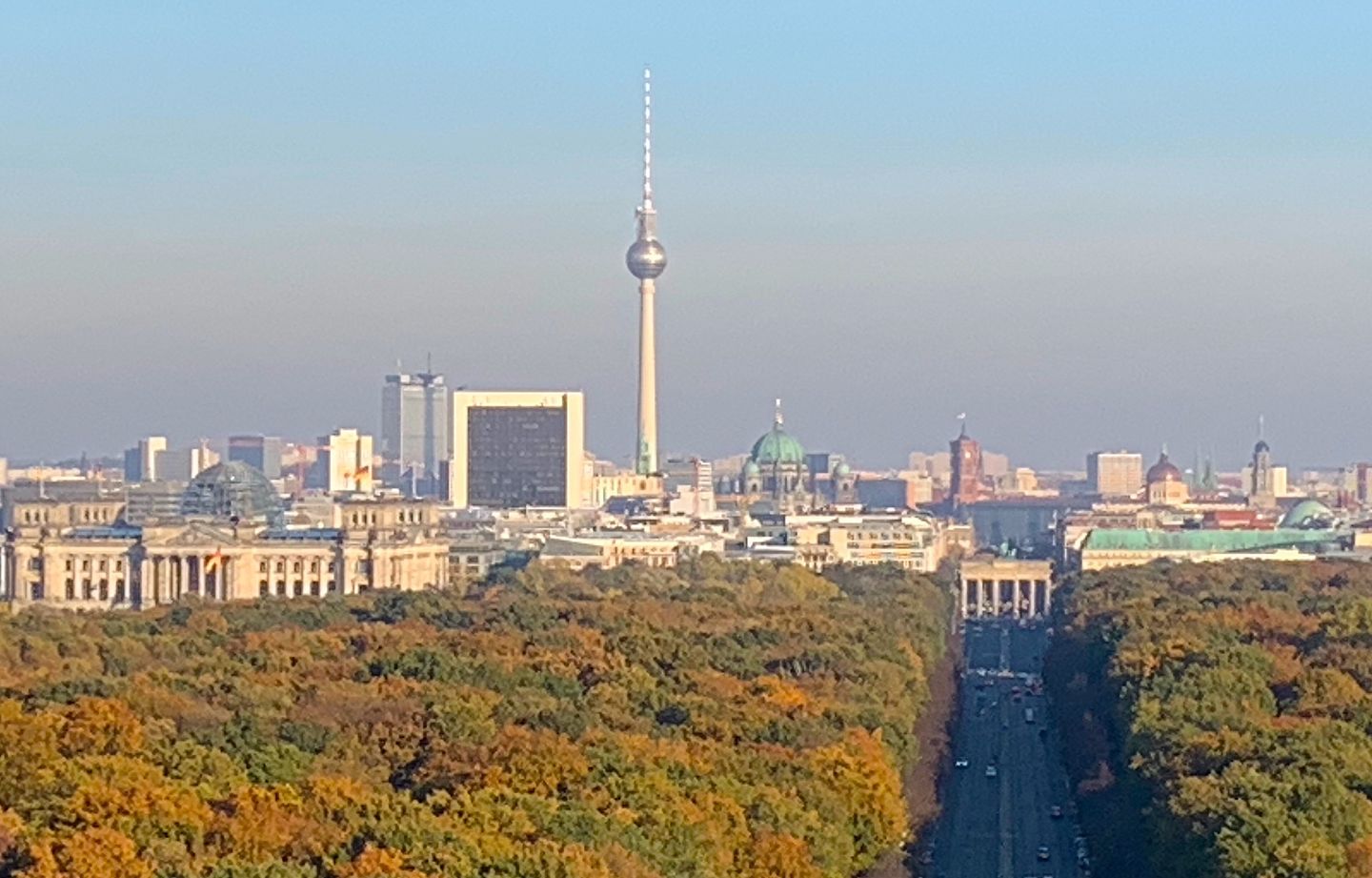
Berlin does not perform history the way older European capitals do, all restored facades and roped-off monuments. It leaves the wound visible. Walk from Mitte into Kreuzberg and you cross a border that no longer physically exists but that every Berliner over forty still narrates by instinct — this side was East, that side was West, this café used to be a gap in the Wall, that nightclub used to be a power substation nobody bothered to demolish. The city rebuilt itself twice in one century, first from the rubble of 1945 and then from the concrete seam of division, and it has never quite finished either job. That incompleteness is the whole appeal.
It is also, not coincidentally, why Berlin became the city Europe's broke, ambitious and slightly feral twenty-somethings moved to for thirty years running. Cheap rent on either side of a newly reunified city meant squats became galleries, power stations became techno clubs, and entire districts filled with people who had come from somewhere else specifically because Berlin didn't ask you to explain yourself. Rents have caught up somewhat since, and the club scene has been half-gentrified into a tourist industry of its own, but the underlying permission — to be strange, unfinished, loudly political, out until noon the next day — has not gone anywhere.
This dispatch treats Berlin as the sprawling, argumentative, unglamorous-on-purpose city it actually is, not a greatest-hits circuit of the Brandenburg Gate and a Wall selfie. What follows covers when to come, how a city with no real centre actually organises itself into workable districts, how Berliners eat when they're not queuing for currywurst, and which neighbourhood suits which kind of trip.
The caseWhy Berlin rewards more than a checklist
The obvious sights are obvious for a reason and worth doing once: the Brandenburg Gate at dawn before the tour groups arrive, the Reichstag's glass dome (book weeks ahead, it's free but ticketed), the East Side Gallery's mile of Wall murals. None of them take more than a morning collectively, and none of them are the reason people fall for this city.
The real case for Berlin is a specific kind of scale — it is enormous, sprawling, low-rise and green in a way that surprises first-time visitors expecting a dense capital, and that space is exactly what let the city become a laboratory for everything from Weimar cabaret to Cold War espionage to the techno scene that reshaped global club culture from a handful of ex-industrial buildings in the 1990s. You feel that permission everywhere: in Prenzlauer Berg's renovated Altbau apartment blocks, in the Soviet-scaled boulevards of Friedrichshain, in the sheer number of vacant lots turned into beer gardens and open-air bars each summer because nobody has quite decided what to build there yet. Berlin is a city more interesting for what it's doing right now than for what it preserved.
The calendarWhen to go
Late May through September is when Berlin makes its best case for itself — long daylight, beer gardens and lake beaches around the Wannsee and Müggelsee in full swing, and a genuine outdoor culture that the rest of the year mostly can't access. July and August are warmest and busiest; June and September trade a few degrees for noticeably thinner crowds and lower hotel rates, and are the better call for most visitors.
Winter is a real trade-off rather than a write-off. December brings some of the best Christmas markets in Germany, spread across a dozen squares with mulled wine (Glühwein) and roast chestnuts, and museum interiors are blissfully uncrowded. But daylight runs out by mid-afternoon, the cold is a damp Baltic-adjacent cold rather than a dry one, and the club scene — Berlin's other major draw — actually runs hottest in the depths of winter, when there's nothing else to do but go underground, literally. Spring (April-May) is unpredictable but cheap and blossoming; avoid the last two weeks of December and early January, when much of the city, restaurants included, quietly shuts for the holidays.
LogisticsGetting around
Berlin is too spread out to walk between districts the way you can in Paris or Prague, so budget for genuinely using the transit network rather than treating it as a backup. The combined U-Bahn (underground), S-Bahn (overground rail), tram and bus system run by BVG and DB is dense, frequent, and refreshingly honest-system — tickets are barely checked, but plainclothes inspectors do fine hard, so validate every ticket at the yellow or red machines before boarding.
Buy a Tageskarte (day ticket) covering zones AB, which is all almost any visitor needs; Schönefeld/BER airport sits in zone C and needs the extended ABC ticket. The BVG app sells everything digitally and is worth installing on arrival. Bikes are a genuinely excellent way to see the city given how flat and cycle-lane-heavy it is — Nextbike and Lime docks are everywhere. Taxis and ride-hail apps exist but are a last resort in a city this well served by rail; save them for late-night trips the night bus network (marked with an N) doesn't cover conveniently.
The tableHow Berlin actually eats
Forget the idea that Berlin is a culinary afterthought next to Munich or Vienna — it just eats differently, shaped by post-war scarcity, a huge Turkish immigrant community from the 1960s guest-worker generation, and three decades of being cheap enough that ambitious young chefs could afford to experiment. The döner kebab, in its modern sandwich form, was substantially invented here, and Kreuzberg's Turkish market (Maybachufer, Tuesdays and Fridays) is one of the best food markets in Germany, not a tourist stop.
Currywurst — sliced sausage doused in curry-spiced ketchup — is the beloved junk-food staple, best eaten standing at an Imbiss stand rather than a sit-down restaurant built for tourists. Beyond street food, Berlin's serious dining scene has grown up considerably in the last decade, with a genuine wave of Michelin-starred and new-Nordic-leaning kitchens, but the more useful habit is simply eating in whichever neighbourhood you're already in rather than trekking for a name — every district has its own strong, unpretentious scene. Spätkauf corner shops (Spätis) selling cold beer around the clock are a genuine Berlin institution and worth using exactly as locals do: as an informal outdoor bar on a warm evening, beer in hand on a park bench or a canal edge.
The mapNeighbourhoods to know
Mitte is the historic and now thoroughly commercial centre — Museum Island, Unter den Linden, the Brandenburg Gate — dense with sights but thin on genuine neighbourhood life; treat it as a place to visit rather than to sleep, unless budget is no object. Prenzlauer Berg, in the former East, gentrified hard after reunification into a leafy, pram-heavy district of renovated 19th-century Altbau blocks, good coffee and quiet squares — pleasant, safe, and a little sanitised compared to what follows.
Kreuzberg and Neukölln, running along and south of the Landwehr canal, are where Berlin's reputation for grit and creative energy actually lives now — Turkish and Arab food culture, street art, late bars, and the Görlitzer Park scene, alongside serious gentrification pressure of their own. Friedrichshain, across the river, carries the Cold War's East Berlin scale in its wide boulevards and is the closest thing the city has to a nightlife capital, home to Berghain and the strip of clubs along the Spree. Charlottenburg, in the old West, is calmer, more moneyed and less written about — the Kurfürstendamm shopping strip, Schloss Charlottenburg's gardens, and a noticeably older, quieter street life than the eastern districts.
Field intelligencePractical intelligence
Germany uses the euro, and Berlin runs cheaper than Munich or Hamburg for food and going out, though accommodation prices have climbed hard in the last decade. Cash is still preferred at plenty of small bars, Imbiss stands and even some restaurants — carry some, don't assume card-only the way you might in Scandinavia. Tipping around five to ten percent, rounded up rather than calculated precisely, is standard; hand it directly to the server rather than leaving it on the table.
Sunday is genuinely quiet — most shops are closed by law, museums and restaurants stay open, but this is not the day to plan retail. Jaywalking is a minor social taboo taken more seriously than the actual traffic risk warrants, especially with children nearby; wait for the green Ampelmann. Club door policy at the famous venues is opaque, subjective and not worth over-thinking — dress down rather than up, go in a small group, and don't take a rejection personally. And carry ID: Germany's police can and do ask for it, and clubs will refuse entry without a physical passport or ID card, phone photos included.
What to see & do
-
Brandenburg Gate
The 18th-century neoclassical gate that stood in the death strip between East and West for three decades and is now the single image most associated with German reunification.
Tip:Come at sunrise — it's the only time of day the square in front is close to empty.
-
Reichstag Building & dome
Norman Foster's glass dome, added in the 1999 renovation, spirals visitors up above the debating chamber with 360-degree views across the government quarter and the Tiergarten.
Tip:Book the free dome visit online at least a few weeks ahead — same-day slots are rare and a passport is required at security.
-
East Side Gallery
A 1.3-kilometre surviving stretch of the Wall along the Spree in Friedrichshain, painted by over a hundred artists in 1990 into the longest open-air gallery in the world.
Tip:Walk it early morning or on a weekday — it's a magnet for tour groups and remains one of the most photographed stretches of wall on earth.
-
Museum Island
Five major museums packed onto a single Spree island, from the Pergamon's ancient Near Eastern reconstructions to the Neues Museum's bust of Nefertiti — a UNESCO World Heritage site in its own right.
Tip:Buy the combined day ticket and pick two museums rather than attempting all five; the Pergamon and Neues Museum pair especially well.
-
Memorial to the Murdered Jews of Europe
Peter Eisenman's field of 2,711 grey concrete slabs near the Brandenburg Gate, disorienting by design as you move from the shallow outer edge into the towering, silent centre.
Tip:Visit the underground information centre beneath the memorial afterward — it grounds the abstract installation in specific documented stories.
-
Berlin Wall Memorial (Bernauer Strasse)
The most complete surviving section of the Wall system, including original guard towers and the 'death strip', with an outdoor exhibition and documentation centre explaining how the border actually worked.
Tip:This is the site for genuinely understanding the Wall's mechanics — the East Side Gallery is the photo, this is the history.
-
Berghain
The techno club housed in a former East German power station that became, against all odds, one of the most written-about nightlife institutions on the planet, notorious for its door policy.
Tip:Go late — after 2am, in a small group, dressed down, and expect to be turned away with no explanation; it happens to almost everyone eventually.
-
Tempelhofer Feld
A former Nazi-era airport whose vast runways and terminal building were repurposed after closure in 2008 into one of the largest urban open spaces in the world — kite surfers, cyclists and urban gardeners now share the tarmac.
Tip:Rent a bike inside the park itself; the full runway loop is several kilometres and the scale only really lands from wheels.
-
Maybachufer Turkish Market
A twice-weekly street market along the Landwehr canal in Neukölln, dense with produce, textiles, olives and flatbread stalls run largely by Berlin's Turkish community.
Tip:Go on a Friday for the busier, more social version, and bring cash — few stalls take cards.
On the groundWhere things are
Map data © OpenStreetMap contributors.
Where to stayBase yourself well
Mitte
Best for first-timers who want the sights on their doorstepThe historic and commercial centre — Museum Island, the Gate and Unter den Linden all within walking distance, at premium prices for the location rather than for neighbourhood character.
A design hotel near Hackescher Markt
Puts Museum Island, the Gate and Berlin's best small galleries within a 15-minute walk in any direction.
€€€A modern apartment stay near Rosenthaler Platz
A quieter northern pocket of Mitte with easy U-Bahn links, a few minutes from the bar-dense Weinbergspark strip.
€€Prenzlauer Berg
Best for a calmer, more local baseLeafy, renovated 19th-century streets in the former East, quieter and more residential than Mitte, with strong coffee and a genuinely pleasant place to actually live for a few days.
A boutique hotel near Kollwitzplatz
One of the district's prettiest squares, ringed by cafés and a Thursday farmers' market, a short tram ride from Mitte.
€€Kreuzberg
Best for nightlife and food-focused tripsThe district Berlin's grit-and-creativity reputation is actually built on — Turkish food culture, street art, canal-side bars, and some of the best independent dining in the city.
An apartment stay near Bergmannkiez
The calmer, more villagey southern half of Kreuzberg, with a strong café scene and easy access to Tempelhofer Feld.
€€Friedrichshain
Best for clubbers and late-night travellersWide Cold War-era boulevards in the former East, the city's nightlife epicentre along the Spree, including Berghain and the RAW-Gelände club strip.
A budget-friendly hotel near Boxhagener Platz
Central to Friedrichshain's bar and club scene, with fast tram links back toward Mitte for the daytime sights.
€Charlottenburg
Best for a quieter, more traditional stayThe calmer, more moneyed former West — the Ku'damm shopping strip, Schloss Charlottenburg, and a noticeably quieter, older street life than the eastern districts.
A classic hotel near Savignyplatz
A genteel, tree-lined pocket with good restaurants and easy S-Bahn access into Mitte in under 20 minutes.
€€€Affiliate notePostcardRoute is reader-supported. Some links to Booking.com (stays, flights, car hire, tickets and tours, airport transfers) are affiliate links, tracked through CJ Affiliate: if you book through them we may earn a small commission at no extra cost to you. We only recommend places we would send a friend.
Book the restEverything else for the trip
Stay sorted? These open Booking.com for the other legs of the journey.
-
Tours & tickets
Things to do in Berlin
Skip-the-line tickets, tours and day trips.
Browse activities -
Wheels
Car hire in Berlin
Compare pick-up points and rental companies.
Compare cars -
Air
Flights
Search fares, then come back for the neighbourhood advice.
Search flights -
Ground
Airport transfers
Book a taxi or private transfer before you land.
Book a transfer
Affiliate noteThese four links are affiliate links too: if you book through them we may earn a small commission at no extra cost to you.
Beyond the cityWorthwhile day trips
- Potsdam
Half an hour by regional train, home to Frederick the Great's Sanssouci Palace and gardens — Prussia's answer to Versailles, and an easy, worthwhile half-day.
- Sachsenhausen Memorial
A former Nazi concentration camp on Berlin's northern edge, reachable by S-Bahn and bus in under an hour, preserved as a memorial and documentation site — sobering, and widely considered essential context for the city.
- Spreewald
A UNESCO biosphere reserve of forested canals an hour southeast by train, where punted gondola tours glide between villages still partly reachable only by water.
Before you goCommon questions
- How many days do you need in Berlin?
- Four full days is a realistic minimum given how spread out the city is — enough for Mitte's museums and monuments, a proper wander through Kreuzberg or Friedrichshain, and one day trip. Three works if you're disciplined about picking districts rather than crisscrossing the city.
- What is the best area to stay in Berlin for first-timers?
- Mitte for the sights on your doorstep, or Prenzlauer Berg for a quieter, more residential base a short tram ride from the centre. Kreuzberg and Friedrichshain suit visitors prioritising nightlife and food culture over walkable monuments.
- Is Berlin expensive to visit?
- Less than most Western European capitals, though rents and hotel rates have risen sharply in the last decade. Street food, Spätis, and the transit system all remain genuinely affordable, and museum and club prices are lower than London or Paris equivalents.
- What is the best time of year to visit Berlin?
- Late May through September for outdoor culture, beer gardens and lake days. December is strong for Christmas markets and quiet museums. Winter proper is cold and dark but is also when the club scene runs hottest, if nightlife is the priority.
- How do I get from Berlin Brandenburg Airport (BER) into the city?
- The Airport Express and regional trains run directly into central Berlin in around 30 minutes on a single BER ticket covering the extended fare zone. The S-Bahn is slower but cheaper, and both beat a taxi given city traffic.
- Is it easy to get into Berghain?
- Not reliably, and nobody has cracked a formula. Go late (after 2am), in a small group, dressed down rather than up, and treat a rejection as normal rather than personal — it happens to most people at least once.