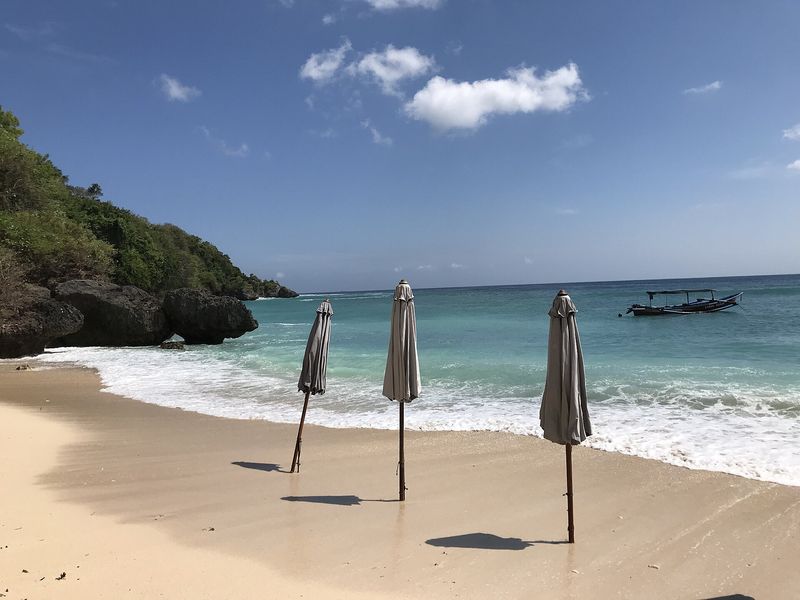
Two islands share one name here — the surf-town Bali of Canggu mornings and the temple-and-terrace Bali of the Ubud hills. The trick is knowing which one you came for.
The island of temples, terraces and slow mornings · 8.41° S · 115.19° E
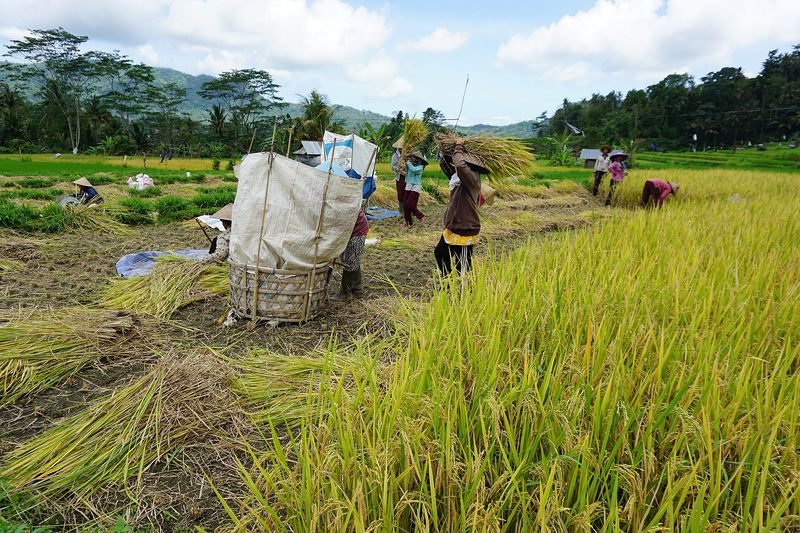
Bali arrives pre-loaded with expectations. Infinity pools and yoga retreats, a beach at golden hour, a temple gate framing a volcano for the camera. All of that is real, and you will find it, but it is a thin slice of an island that has been a living Hindu culture for more than a thousand years and remains, stubbornly and beautifully, itself. Under the resorts and the smoothie bowls is Bali proper: a place of daily offerings on every doorstep, of rice fields terraced by hand across impossible slopes, of temple ceremonies that empty the roads and fill them again with processions in white and gold.
This is not a list of the ten sunset spots you must photograph before you leave. Most of those you will stumble into anyway. What follows is the harder, more useful information — where to base yourself so the island feels legible rather than overwhelming, how the wet and dry seasons genuinely change the trip, how to move around on two wheels without becoming a cautionary tale, and how to eat and behave so that Bali opens up rather than sells itself to you.
The island rewards a base and a pace, not a checklist. Pick a corner that suits your temperament, learn its rhythms, and take day trips out from there. Try to see all of it in a week from the back of a hired car and you will spend that week in traffic, arriving everywhere slightly too late.
The caseWhy Bali is more than its postcard
People who call Bali overrun are usually describing a four-kilometre coastal strip and mistaking it for an island the size of a small country. Drive twenty minutes inland from almost anywhere and the billboards fall away, replaced by walled family compounds, roadside warungs, and rice at every stage of green. What holds it together is Balinese Hinduism, a syncretic faith found nowhere else on earth, expressed less in grand cathedrals than in relentless small acts — the canang sari offerings of flowers and rice laid out fresh each morning, the temple that every village, every home, every rice field maintains.
The pleasures here are layered rather than singular. You can start a day with a dawn surf at a reef break, spend the middle of it walking a terraced valley to a waterfall almost nobody else has found, and end it watching a fire-lit kecak dance on a clifftop as the sun drops into the Indian Ocean. None of it requires a fortune. The island's genius is that its best experiences — a temple ceremony you are welcomed to observe, a plate of nasi campur eaten at a plastic table, a motorbike ride through the terraces at the hour the light goes gold — are the cheap ones.
The map, firstThe two Balis, and choosing yours
Before anything else, understand that Bali splits roughly in two, and the halves attract different people. There is the coastal, hedonistic, endlessly caffeinated Bali of the southwest — Canggu, Seminyak, Uluwatu — built on surf, sunset bars, digital-nomad cafés and a nightlife that runs late. And there is the inland, spiritual, cooler Bali of the hills, centred on Ubud, where the days are structured around temples, terraces, art markets and wellness rather than waves.
Most first trips try to hold both, and that is the right instinct — they are only an hour or two apart. But the mistake is treating them as interchangeable. If you want mornings in the surf and evenings in a crowd, base south. If you want jungle, quiet, and ceremony, base in or near Ubud. The smart move on a week-long trip is to split it: a few nights inland and a few on the coast, so you feel both temperaments rather than blurring them into one long transfer.
The calendarWhen to go: wet, dry, and the shoulders
Bali has two seasons, and the difference is real. The dry season runs roughly April to October, and July and August are its peak — reliable sunshine, the best surf on the west coast, and the largest crowds and highest prices of the year. If you want guaranteed weather and do not mind sharing, this is the window. The wet season, November to March, brings warm downpours that tend to arrive in dramatic afternoon bursts rather than all-day grey, along with lush, saturated landscapes, cheaper rates, and far fewer people.
The honest sweet spots are the shoulder months. May, June, and September give you dry-season weather without the peak-season scrum or prices. Do not write off the wet season either: a January morning is often bright and clear before the rain builds after lunch, the rice terraces are at their most electric green, and you will have the waterfalls and temples nearly to yourself. Whenever you come, check the Balinese calendar for Nyepi, the island's Day of Silence in March — the entire island shuts down completely for twenty-four hours, airport included. Extraordinary to witness, disastrous to arrive into unprepared.
LogisticsGetting around: the scooter question
There is no meaningful public transport, and the roads were built for a fraction of the traffic they now carry, so how you get around defines the trip. The default local answer is a scooter, and for good reason — a rented automatic bike costs a few dollars a day, slips past the jams that trap cars, and is genuinely the only way to reach the back-road terraces and hidden temples. But be clear-eyed: Bali's roads are chaotic, wet-season surfaces are slick, and clinics see foreign scooter injuries daily. Ride only if you are confident, wear a real helmet, and understand your travel insurance almost certainly voids the claim without a valid motorcycle licence.
If two wheels are not for you, the practical alternative is a private driver for full days out — easily arranged, affordable when split, and the sane way to cover longer distances like Ubud to Uluwatu. For short hops, the Grab and Gojek apps offer cheap cars and bikes, though some tourist areas restrict app pickups to protect local taxi drivers, so you sometimes walk a block to meet the car. Whatever you choose, factor in that Bali traffic is worse than the map suggests: a thirty-kilometre trip can eat two hours. Plan fewer things, further apart, and enjoy them properly.
The tableWarungs, and how Bali actually eats
Skip the fusion cafés for at least a few meals and eat at warungs — the small, often family-run local eateries that are the true heart of Balinese food. The classic order is nasi campur: a plate of rice surrounded by a rotating cast of small dishes you point at, from tender chicken and tempeh to fiery sambal and crisp fried shallots. It costs a couple of dollars and it is frequently the best thing you eat all week. Look for the warung that is busy with locals at lunch; that is the whole review you need.
Learn a few island dishes and hunt them down. Babi guling, the ceremonial spit-roast suckling pig, is a Balinese institution — Ubud's Warung Ibu Oka made it famous, though quieter local versions abound. Bebek betutu is duck slow-cooked for hours in a paste of turmeric, ginger and lemongrass, wrapped in banana leaf. Sate lilit, minced fish or chicken pressed onto lemongrass skewers, is the island's own take on satay. For breakfast, the smoothie-bowl-and-flat-white culture of Canggu is real and often excellent, but do not let it eat every morning. A bowl of bubur, savoury rice porridge from a roadside cart, is the more honest start to a Bali day.
The areasThe areas worth knowing
Ubud, up in the cooler central hills, is the cultural capital — the base for terraces, temples, yoga and art, ringed by valleys and monkey-filled forest. It has grown busy and its centre can feel like a slow-moving traffic jam of shuttles, but stay on its fringes among the rice fields and it delivers exactly the Bali the postcards promised. Canggu, on the southwest coast, is the surf-and-startup town — black-sand beach breaks, warehouse cafés, co-working spaces and a young international crowd that has made it the island's nomad capital, for better and worse.
Seminyak is the polished older sibling of Canggu: designer boutiques, beach clubs, and Bali's best concentration of serious restaurants, with a more grown-up, moneyed feel. Uluwatu, down on the arid Bukit Peninsula in the far south, is cliffs and world-class reef surf, clifftop bars and a cinematic sea-temple, spread out and requiring wheels but rewarding the effort with the island's most dramatic coastline. And Sidemen, an hour east of Ubud, is what Ubud was twenty years ago — a quiet valley of terraced rice under Mount Agung, almost untouched by mass tourism, and the antidote if the south has worn you out.
Field intelligencePractical intelligence
A handful of things that quietly smooth every Bali trip. Dress and behave respectfully at temples — a sarong and sash are required and usually provided or rented at the gate, shoulders should be covered, and you should never enter if you are menstruating, per local custom that is taken seriously. Step around the little canang sari offerings on the pavement rather than through them; they are small daily acts of devotion, not decoration.
Carry cash. Warungs, small shops and many drivers do not take cards, and ATMs, while common, sometimes run dry in quieter areas. Bali belly is real — be sensible with tap water (drink bottled or filtered, and refill from the water stations that are increasingly common to cut plastic), and give your stomach a day to adjust before the street food. The sun is equatorial and stronger than it feels in the sea breeze, so reef-safe sunscreen is worth packing. And build slack into your days: nothing on this island runs on a tight schedule, ceremonies close roads without warning, and the traveller who accepts island time has a far better trip than the one fighting it.
What to see & do
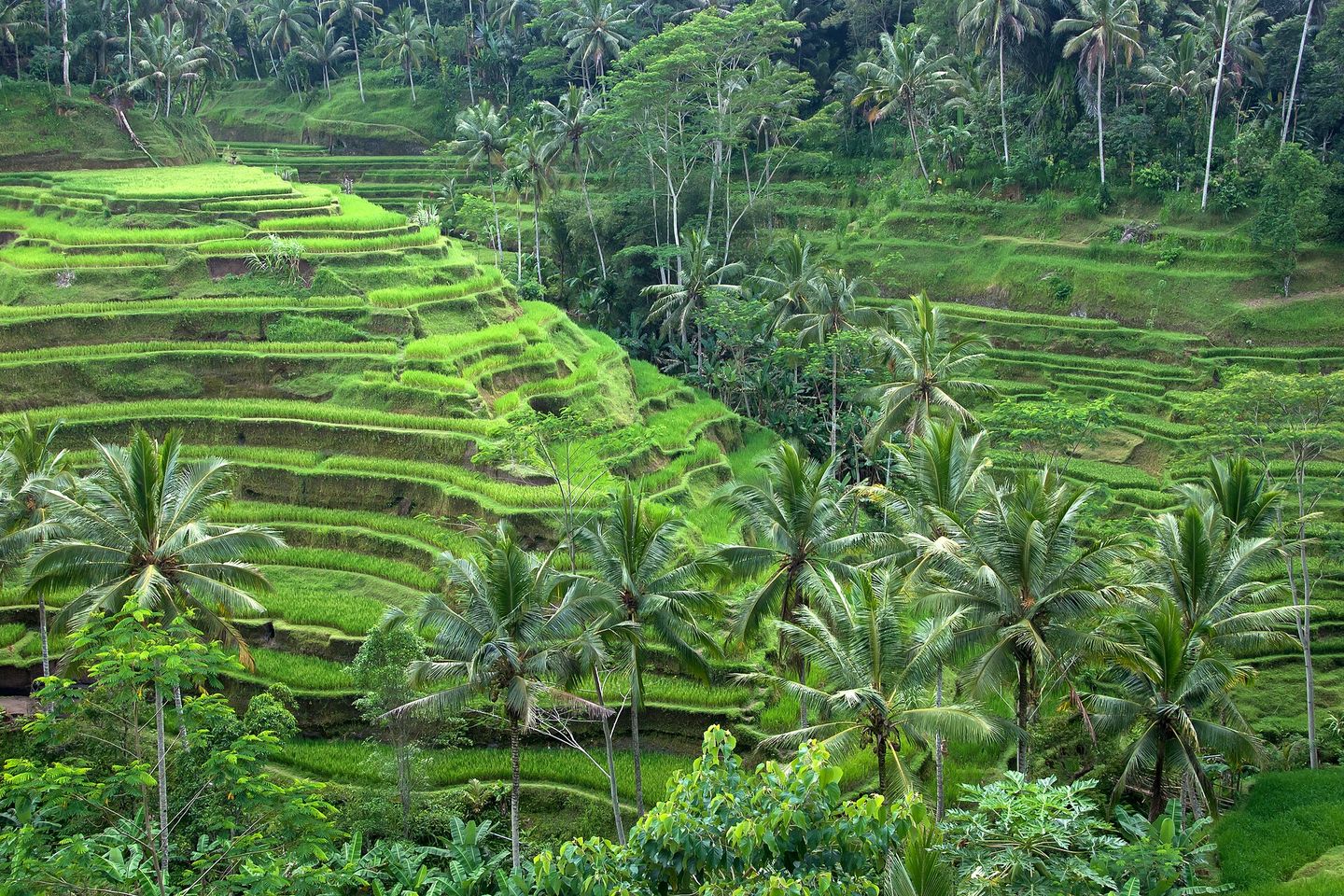
Photo: Philip Nalangan·CC BY 4.0·SourceTegallalang Rice Terraces
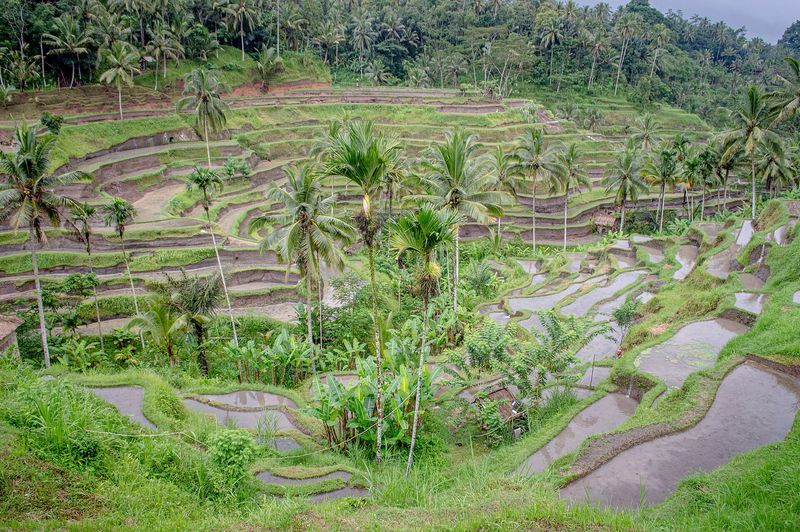
The most photographed terraces on the island, a steep amphitheatre of hand-carved paddies just north of Ubud, worked by the ancient subak irrigation cooperatives that UNESCO recognises as a living cultural landscape.
Tip:Come at first light before the tour buses and the swing-photo queues; by nine it is a scrum, by seven it is yours.
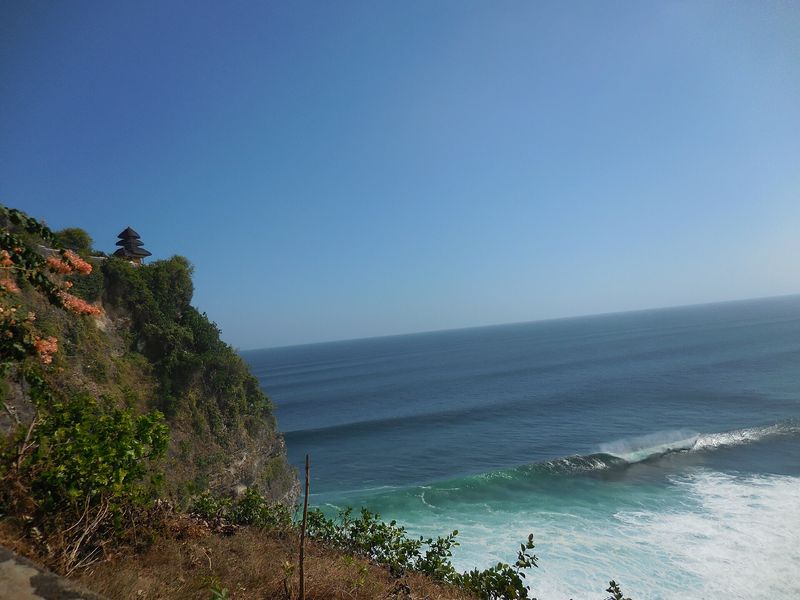
A sea temple perched on a sheer cliff at the island's southern tip, best at dusk when the daily kecak fire dance is performed on the clifftop as the sun sets into the ocean behind the dancers.
Tip:Hold your bag and hat tight — the resident macaques are practised thieves who swap stolen sunglasses back for food.
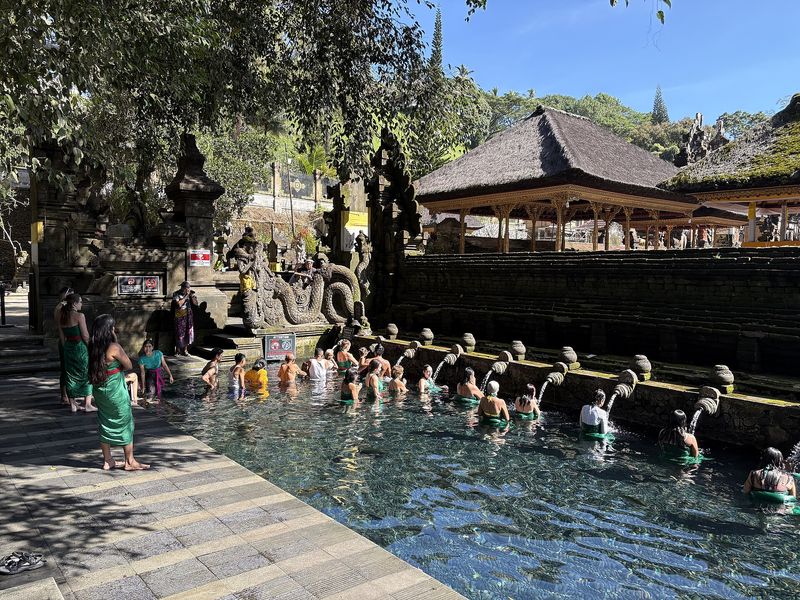
A thousand-year-old water temple near Tampaksiring where Balinese Hindus come to perform melukat, ritual purification under a row of stone spouts fed by a sacred spring.
Tip:You can bathe too, but do it respectfully behind the worshippers, rent the proper sarong, and go early before the crowds thicken the pools.
A serene sweep of terraced rice beneath Mount Agung, an hour east of Ubud and a world away from the crowds, laced with walking trails between villages and family weaving workshops.
Tip:Skip the tour and just walk out from your guesthouse at sunrise; the valley paths need no ticket and no guide.
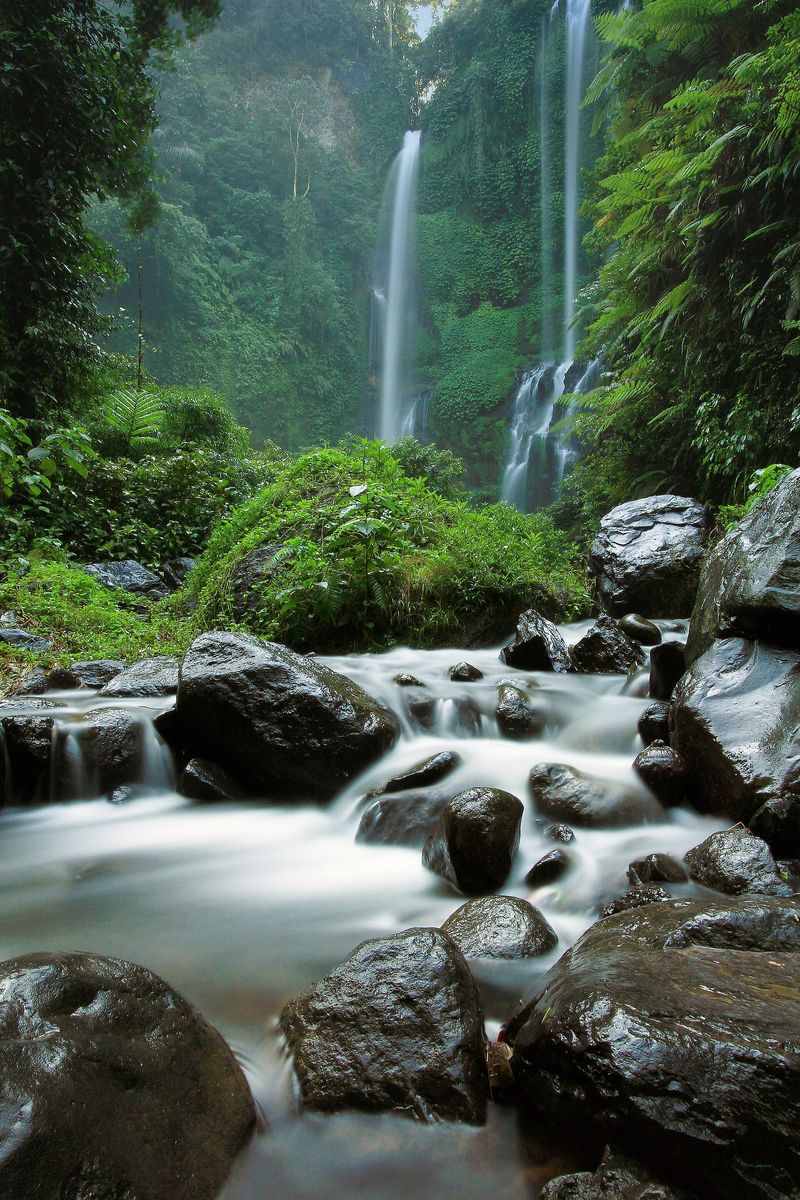
A cluster of tall falls in the jungle-clad north, widely reckoned the island's most spectacular, reached by a steep trek down and back up through the valley.
Tip:Wear proper shoes and go with the flow of the local guides at the top; the climb back is the real workout, so bring water.
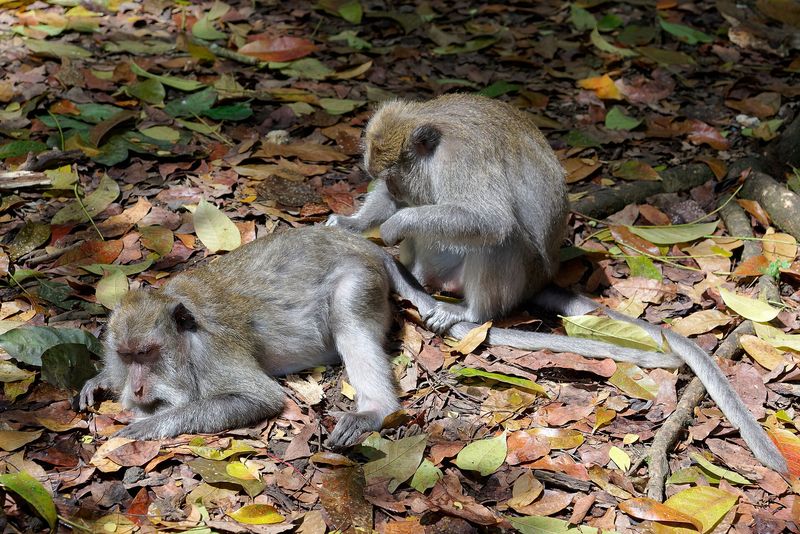
A cool, mossy temple sanctuary in the heart of Ubud, threaded with stone stairways and banyan roots, home to several hundred long-tailed macaques living among the shrines.
Tip:Keep food and loose items zipped away entirely; these monkeys are bold, and eye contact reads as a challenge, so look away.
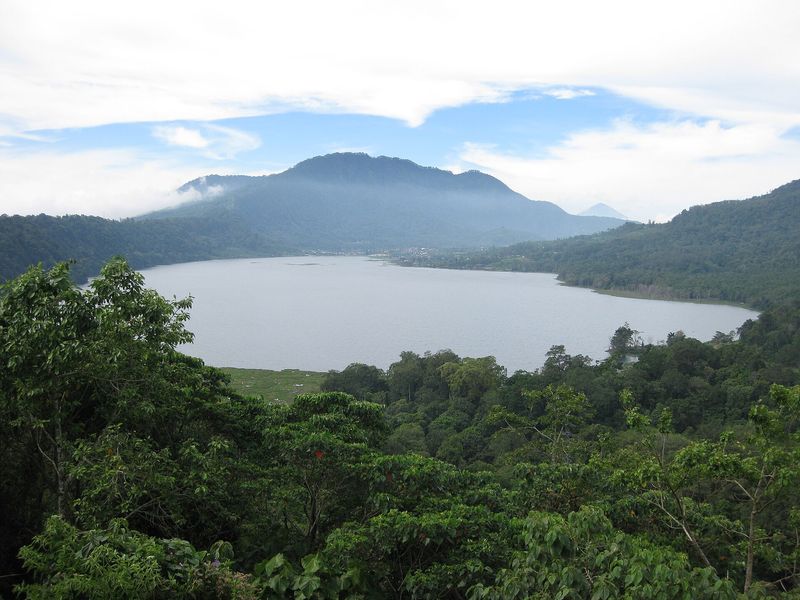
The misty, cloud-forest interior around Munduk, where twin crater lakes, coffee plantations and cooler air offer a completely different Bali from the beaches below.
Tip:Base a night up here rather than day-tripping; the highland mornings, before the cloud rolls in, are the reward.
The string of white-sand coves tucked beneath the Uluwatu cliffs, reached through cracks in the limestone, with some of the island's cleanest water and best surf.
Tip:Padang Padang is famous but tiny and gets packed; walk or ride to Bingin or Nyang Nyang nearby for more room.
Tanah Lot
The sea temple on its own rock outcrop, cut off from the shore at high tide, and the single image most people already have of Bali before they arrive — best at sunset, when the silhouette does the work.
Tip:Go for sunset but arrive by mid-afternoon to walk the tide pools and claim a spot before the coach tours pile in; the car park crowds are relentless right up until the light actually turns.
The cultural and spiritual heart, up in the cooler hills — temples, terraces, yoga, and art markets, ringed by jungle valleys. The centre is busy and traffic-clogged, but the outskirts among the rice fields are magical.
A valley-view retreat on the Ubud fringe
Stay just outside the centre toward Penestanan or the Sayan ridge for jungle views and birdsong without the downtown scooter crush.
The surf-and-startup coast — black-sand beach breaks, warehouse cafés, co-working, and a young international crowd. Loud, caffeinated, and fun, with the island's best casual dining and worst traffic.
Berawa Dini Guesthouse
Berawa is Canggu's most walkable pocket, dense with cafés and beach clubs, so you can leave the scooter parked more often.
The grown-up, moneyed coastal option — boutiques, beach clubs, and Bali's best concentration of serious restaurants. More polished and less scruffy than Canggu, closer to the airport, and priced accordingly.
Ibis Styles Bali Petitenget
The northern Petitenget end is the sweet spot — top restaurants and a calmer beach without the Kuta-adjacent chaos further south.
Dramatic clifftop coastline on the arid southern peninsula — world-class reef surf, hidden coves, and sunset bars carved into the limestone. Spread out and reliant on wheels, but the island's most cinematic scenery.
Luxurious 6BR Clifftop Villa, 5 Minutes to Bingin
The Bingin and Uluwatu cliffs deliver the sea views the region is famous for, with the best breaks a scramble down the steps below.
The quiet east — a terraced valley under Mount Agung that feels like Ubud twenty years ago, almost untouched by mass tourism. Little nightlife, few restaurants, and all the better for it if you want stillness.
LeLangit Eco Cabin
Sidemen's small lodges perch above the paddies with Agung filling the horizon; wake for the sunrise and you understand why people come.
Affiliate notePostcardRoute is reader-supported. Some links to Booking.com (stays, flights, car hire, tickets and tours, airport transfers) are affiliate links, tracked through CJ Affiliate: if you book through them we may earn a small commission at no extra cost to you. We only recommend places we would send a friend.
Book the restEverything else for the trip
Stay sorted? These open Booking.com for the other legs of the journey.
Affiliate noteThese four links are affiliate links too: if you book through them we may earn a small commission at no extra cost to you.
Beyond the cityWorthwhile day trips
Mount Batur sunrise trek
A pre-dawn climb up an active volcano to watch the sun rise over the caldera and Lake Batur, breakfast cooked in volcanic steam at the summit. Go with a local guide and start absurdly early.
Nusa Penida
A rugged island off the southeast coast, reached by fast boat, with cliff-framed beaches like Kelingking and superb snorkelling with manta rays. Doable in a long day, better with an overnight.
The north coast & Munduk
Trade the beaches for cloud forest, crater lakes, waterfalls and coffee plantations in the cooler highlands. A full day out from Ubud, or a worthwhile overnight to catch the clear mornings.
Ten days is the comfortable sweet spot to feel both sides of the island without living in the car. Split it: a few nights inland around Ubud for temples and terraces, a few on the coast for surf and sunsets, and a day trip or two out to Nusa Penida or the highlands. A week works if you focus on one base; anything shorter and the traffic eats the trip.
Should I stay in Ubud or Canggu?
It depends entirely on what you came for. Ubud is jungle, temples, terraces, yoga and cooler air — the cultural, spiritual Bali. Canggu is surf, cafés, beach clubs and a young international crowd — the coastal, social Bali. On a longer trip, do both: they are only about ninety minutes apart, and splitting your stay is the single best way to understand the island.
Is it safe to rent a scooter in Bali?
It is the cheapest and most flexible way around, and how most locals travel, but Bali's roads are genuinely hazardous and foreign scooter injuries are common. Ride only if you are experienced, always wear a proper helmet, and know that most travel insurance will not pay out without a valid motorcycle licence. If you are not confident, hire a private driver for day trips and use the Grab or Gojek apps for short hops.
When is the best time to visit Bali?
The dry season, April to October, offers the most reliable weather, with July and August the busiest and priciest. The shoulder months — May, June and September — are the sweet spot for good weather without peak crowds. The wet season, November to March, is greener, quieter and cheaper, with rain that usually falls in short afternoon bursts. Avoid arriving on Nyepi, the March Day of Silence, when the whole island including the airport shuts down.
Do I need cash in Bali, or will cards work?
Bring cash. Resorts, upscale restaurants and larger shops take cards, but warungs, small vendors, markets and most drivers are cash-only, and ATMs in quieter areas occasionally run dry. Carry enough Indonesian rupiah for a few days at a time, keep some smaller notes for offerings, parking and tips, and use ATMs attached to banks rather than standalone machines to reduce skimming risk.
What should I know about temple etiquette in Bali?
Temples are active places of worship, so dress and behave accordingly. A sarong and sash covering the legs are required and usually available to rent or borrow at the entrance, and shoulders should be covered. By local custom, menstruating women do not enter temple grounds. Never step on or over the small daily offerings on pavements and thresholds, stay behind worshippers during ceremonies, and ask before photographing people at prayer.
We'd like to use a Meta (Facebook) pixel to see which guides are worth writing more of. It only loads if you say yes — decline and nothing from Facebook ever runs. Details on the Privacy page.